The New Way to Drive

Matteo
| 13-07-2026
 · Automobile team
Let's be honest—buying a car used to feel like a milestone. Down payment, loan paperwork, insurance quotes, depreciation anxiety. Now? Some people are skipping all of it.
Enter car subscription services: monthly fees that bundle insurance, maintenance, roadside help, and even swapping models whenever you feel like it.
Companies like Care by Volvo, Porsche Passport, and BMW Select are making this more than a luxury experiment. But does it actually make sense for everyday drivers? Let's look at two real cases—not hypotheticals, not marketing fluff—just people who tried it.
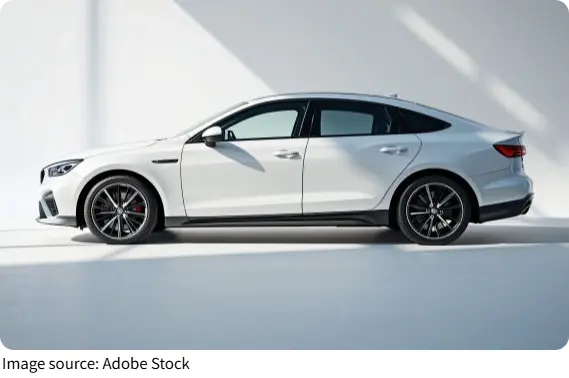
Take Sarah, a project manager in Portland. She'd owned the same Honda Civic for eight years, but her job started requiring more client meetings in different cities. She needed a car that felt professional, but didn't want to lock herself into a 60-month loan for a $40K SUV.
She signed up for Care by Volvo in early 2023. Her $799/month plan included an XC40 Recharge, full coverage insurance, scheduled maintenance, and tire replacements. She swapped to a V60 wagon three months later when she started biking to work more often and needed extra cargo space.
No trade-in hassles. No resale value guesswork. She just logged into the app, picked a new model, and had it delivered to her driveway in 48 hours. "It's like Netflix for cars," she told me. "I don't own it, but I get exactly what I need, when I need it."
Then there's Mark, a freelance photographer in Austin. He used to own a rugged Jeep Wrangler for weekend trips and a compact sedan for city errands. But maintaining two vehicles meant two sets of insurance, two service appointments, two parking permits. He switched to Porsche Passport, which lets subscribers choose from a curated fleet of Cayennes,
Macans, and 718s for a flat $1,300/month. He rotates between them based on his shoot schedule—Cayenne for mountain terrain, 718 for city traffic. The service even handles cleaning, fueling, and minor dings. "I used to dread the ‘car season'—oil changes, tire rotations, that weird smell after rain," he said. "Now I just drive, and someone else deals with the rest."
These aren't outliers. According to Harald Proff, Global Automotive Sector Leader at Deloitte, consumer interest in vehicle subscription services is being driven by demand for greater flexibility, convenience, and predictable monthly costs. Deloitte's Global Automotive Consumer Study finds that subscription models appeal because they offer shorter commitments than traditional leasing and, in some cases, allow customers to switch vehicles as their needs change.
Unlike buying, there's no down payment, no credit check beyond a basic background screen, and no long-term commitment. Maintenance, repairs, and even wear-and-tear coverage are baked in—no surprise bills. But it's not perfect. The monthly cost is higher than a lease or loan on a comparable vehicle. A Care by Volvo XC40 costs about $799/month.
A 36-month lease on the same model averages $520. But when you add insurance ($120), maintenance ($40), and potential repair costs ($0 if you're lucky), the real cost of ownership starts to look more like $680–$750. Suddenly, the subscription isn't so expensive—it's just priced differently.
Another hidden benefit? No depreciation stress. If your car gets scratched or dented, the subscription service absorbs the cost (within reasonable limits). If you drive more than expected? No mileage penalties. If you need to pause for a few months? Most allow you to freeze the plan with 30 days' notice. That's something no loan or lease offers.
The real shift isn't just about convenience—it's about redefining what "having a car" means. For many, the car isn't a status symbol anymore. It's a tool. And tools should adapt to your life, not the other way around.
So, Should You Subscribe?
If you change your driving needs often—seasonal trips, remote work, evolving family needs, or just tired of car stress—subscriptions are a game-changer. If you drive under 8,000 miles a year and want zero hassle, it's worth the premium. But if you're a high-mileage commuter or plan to keep a car for over a decade, traditional ownership still wins.
Two real people. Two real lifestyles. One clear trend: the future of cars isn't just about who owns them—it's about who they serve. You don't need to buy a car to use one. The real innovation isn't electric engines or self-driving tech—it's letting you treat your vehicle like a utility, not an asset. For many, that's not just smarter. It's liberating.