Carved by Everything

Kenji
| 27-07-2026
 · Travel team
Over 300 million years, the Colorado and Green Rivers carved such a deep, vast landscape in southeastern Utah that the national park is divided into three districts—each with separate entrances, no roads connecting them within the park.
Canyonlands National Park covers 527 square miles of mesas, buttes, spires, arches, and canyons layered in red, white, and orange sandstone.
This is not a park that reveals itself from a single overlook—it is a landscape that demands days, miles, and the willingness to stand at an edge and look a thousand feet straight down.
Island in the Sky
The most visited district—Island in the Sky—sits on a broad mesa 1,000 feet above the surrounding canyon floor, approximately 40 minutes from Moab. Paved roads connect a series of overlooks that deliver panoramic views across hundreds of square miles of canyon country.
Mesa Arch—a 0.5-mile (0.8-kilometer) round-trip trail—frames sunrise through a natural stone arch perched on the cliff edge, creating one of the most photographed scenes in Utah. Grand View Point (2-mile / 3.2-kilometer round-trip trail) provides sweeping 360-degree canyon panoramas. Upheaval Dome offers a unique crater-like geological formation. All trails are free beyond the park entrance fee.
The Needles
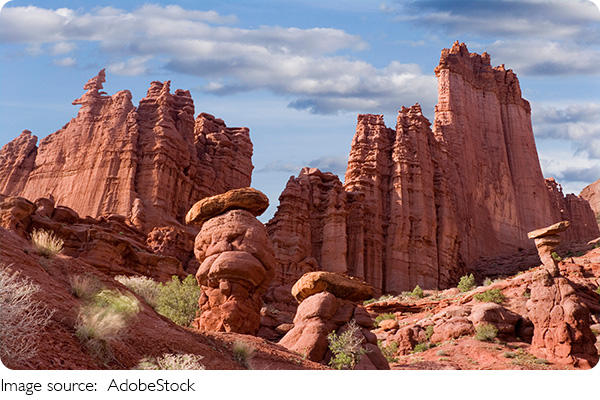
The Needles district—approximately 90 minutes from Moab via a different entrance—offers a more immersive, ground-level canyon experience among colorful sandstone spires. Chesler Park Loop (5.4 miles / 8.7 kilometers) winds through towering rock formations in one of the park's most scenic hiking environments. Druid Arch (10.8 miles / 17.4 kilometers round trip) rewards strenuous effort with a massive, free-standing arch deep in the backcountry.
Cave Spring Trail (0.6 miles / 1 kilometer) provides an easy introduction to the district's geological and cultural features. The Needles feels wilder and more isolated than Island in the Sky—fewer visitors, longer trails, deeper solitude.
Fees and Passes
The standard entrance fee is $30 per private vehicle, valid for seven consecutive days at all districts. The America the Beautiful Annual Pass ($80) covers Canyonlands and all other U.S. national parks and federal recreation sites for one year—essential value for any Utah road trip, where five national parks sit within driving distance of each other.
Backcountry overnight permits cost approximately $36. No additional fees apply for day hiking on any trail within the park.
Getting There
Moab—the gateway town for Island in the Sky—sits approximately 40 minutes from the district entrance. The Needles entrance is approximately 90 minutes from Moab via US-191 and UT-211. Car rental from Grand Junction, Colorado (the nearest major airport, approximately 1.5 hours from Moab), costs approximately $70 to $160 per day for standard vehicles.
SUV and 4WD rentals for backcountry access cost $150 to $200+ per day. Fuel up in Moab before entering any district—there are no gas stations inside the park.
Canyonlands National Park
Where to Stay
Moab offers the widest accommodation range. Budget motels during off-season (winter) start from $80 to $120 per night. Peak-season (spring and fall) rates climb to $250 to $350+. In-park camping at Willow Flat (Island in the Sky) and Squaw Flat (Needles) costs approximately $15 to $20 per night—most sites are first-come, first-served and fill before noon during peak months.
BLM dispersed camping near Moab is free but requires self-sufficiency (no facilities, no water). For the Needles district, the towns of Monticello and Blanding offer closer hotel options from approximately $70 to $130 per night.
Eating in Moab
Fast-food meals in Moab cost approximately $14 per person. Mid-range restaurant dinners for two run approximately $60 to $75. Grocery shopping at City Market for self-catering and trail food keeps daily costs at $30 to $50 per person. Moab's food scene is better than expected for a small desert town—several locally owned restaurants serve quality Southwestern and American cuisine.
Carrying all food and at least one gallon of water per person per day is essential for any trail activity in the park—there are no food or water services inside Canyonlands.
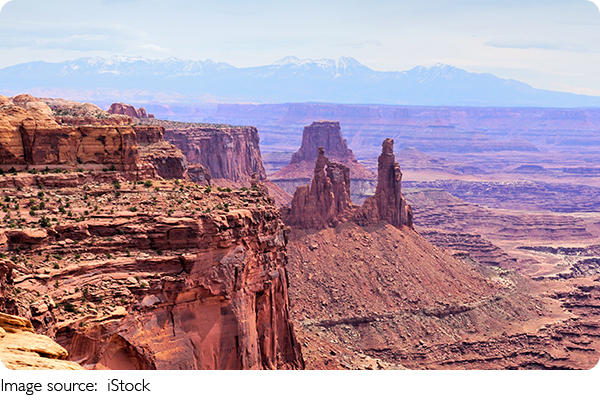
Readers, Canyonlands is a park that operates on a geological timescale so vast that the human mind struggles to process it—300 million years of deposition and erosion visible in a single canyon wall, two rivers converging at the bottom of a landscape carved so deep that the rim and the river occupy fundamentally different worlds.
Standing at Grand View Point and looking across hundreds of miles of red rock carved by time, wind, and water, the scale of what nature builds when given enough millennia becomes physically overwhelming. Does standing at the edge of a canyon make you feel small—or does it make everything else feel small by comparison?