Exploring the Isle of Skye

Arvind Singh
| 02-09-2026
 · Travel team
Lykkers, off the northwest coast of Scotland, connected to the mainland by a bridge, the Isle of Skye compresses more dramatic geology into a single island than most countries contain across their entire territory.
Jagged pinnacles rise from moorland, crystal-blue pools cascade through rocky gorges, sea cliffs drop vertically into the Atlantic, and a white lighthouse perches on the westernmost point where the sky and the ocean become indistinguishable.
Skye is an island of constant weather change—four seasons in a single afternoon—where waterproof layers are as essential as hiking boots, and where the landscape rewards travelers who accept that the rain is part of the experience.
Neist Point Lighthouse
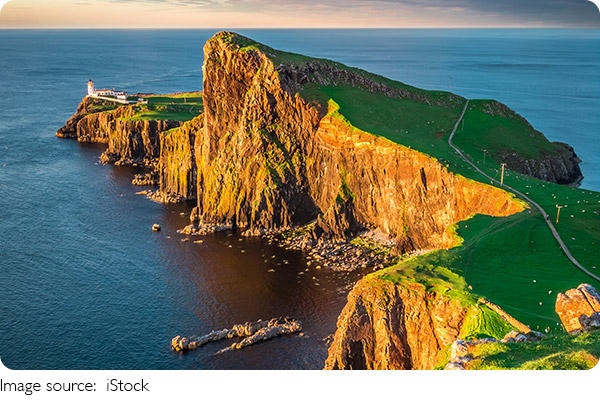
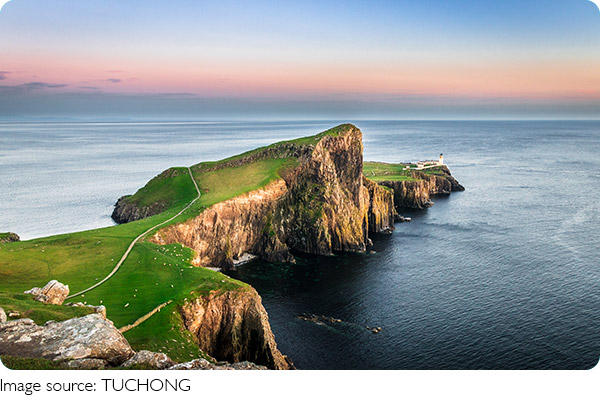
The Neist Point Lighthouse—perched on the westernmost tip of Skye—is one of the most spectacular coastal viewpoints in all of Scotland. The walk from the car park to the lighthouse takes approximately 30 to 40 minutes along a well-defined but steep path of roughly 1.5 kilometers each way, descending and then climbing along dramatic basalt sea cliffs.
The lighthouse itself is not open to visitors, but the surrounding cliffs and viewpoints provide panoramic 270-degree ocean views. Sunset visits create extraordinary lighting conditions—the lighthouse silhouetted against the Atlantic horizon. Dolphins are occasionally visible from the clifftop. No entrance fee applies. Parking at the Neist Point car park is free but limited—arriving before late morning during peak summer avoids the worst congestion.
Old Man of Storr
The Old Man of Storr—a 50-meter pinnacle of ancient lava rock standing above the Trotternish Ridge—is Skye's most iconic geological formation. The hike to the base of the pinnacles takes approximately 1.5 to 2 hours round trip on a steep, well-worn path. The trail begins from a roadside car park (parking approximately $3 to $5 / £2.50 to £4).
Wet conditions make the upper sections muddy and slippery—waterproof hiking boots are essential. Early morning starts (before 8:00 AM) avoid the tour bus crowds that arrive by mid-morning. The formation is free to visit.
Fairy Pools
The Fairy Pools—a series of crystal-clear blue and green rock pools connected by small waterfalls in Glen Brittle—are among the most photographed natural features on Skye. The walking path from the car park follows the river for approximately 2.4 kilometers round trip on gravel paths. Arriving before 8:45 AM avoids peak congestion and secures easier parking.
The pools are free to visit. Swimming is legal but extremely cold even in summer—water temperatures rarely exceed 10 degrees Celsius. The surrounding Cuillin Mountains provide a dramatic backdrop visible from the trail.
Getting There
The Skye Bridge connects the island to the Scottish mainland at Kyle of Lochalsh—no toll, no ferry required (though a summer car ferry operates from Mallaig to Armadale on Skye's southern coast, approximately $20 to $30 / £15 to £25 per vehicle). The nearest airport with regular service is Inverness (INV), approximately 2 to 2.5 hours' drive from Portree, Skye's capital.
Car rental from Inverness starts from approximately $33 to $90 (£25 to £70) per day. Renting a car is strongly recommended—public transport on Skye is limited and does not reach most trailheads. Single-track roads with passing places are common—patience and courtesy are required.
Skye
Where to Stay
Portree—the island's main town—offers the widest range of accommodation and services. Budget rooms and guesthouses start from approximately $125 to $200 (£95 to £150) per night. Upscale properties exceed $265 to $530+ (£200 to £400+).
Booking six to nine months ahead for summer dates (June through August) is essential—Skye's accommodation capacity is limited relative to visitor demand. Alternative bases include Broadford, Sligachan, and the remote Waternish and Duirinish peninsulas. Campsites offer the most affordable option at approximately $15 to $30 (£12 to £22) per night.
Eating on Skye
Skye's food scene emphasizes locally sourced seafood. Budget meals from food trucks and bakeries cost approximately $8 to $13 (£6 to £10). Casual dining at local restaurants runs $20 to $30 (£15 to £22) per person. Fine dining establishments charge $50+ (£38+) per person—dinner reservations at popular restaurants are essential during peak season.
Self-catering from the Co-op in Portree keeps daily food costs at approximately $15 to $25 (£12 to £20) per person. Many restaurants reduce hours or close entirely from October through March.
Readers, the Isle of Skye is one of those places where the dramatic and the intimate exist in the same frame—sea cliffs hundreds of feet high and tiny crystal pools you could cup in two hands; a lighthouse on the edge of the Atlantic and a single-track road where you pull over to let a camper van pass.
The weather can change quickly, the light shifts constantly, and the landscape will likely make you stop the car more times than you planned. Would you brave a little rain to experience views like these?