Iron Lace Above the Seine

Amina Hassan
| 08-07-2026
 · Travel team
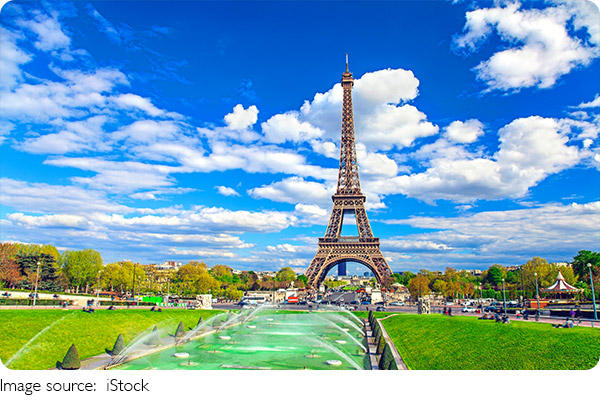
Friends, at the western end of the Champ de Mars in Paris, France, a lattice of 18,038 iron pieces bolted together with 2.5 million rivets rises 330 meters above the Seine. The Eiffel Tower—built for the 1889 World's Fair and originally intended as a temporary structure—has become the most visited paid monument on the planet, drawing approximately seven million visitors per year. But the Tower is a starting point, not an endpoint. Paris unfolds in every direction from its summit—the Seine curving through the city, rooftops stretching to the horizon, and a density of museums, gardens, and riverside walks that no single visit can exhaust.
Climbing Options
The Eiffel Tower offers two distinct ways to ascend. The stairs—over 600 steps to the second floor—cost approximately $16 (€15) for adults aged 24 and older, $8 (€7.50) for youth aged 12 to 24, and under $4.50 (€4) for children aged 4 to 11. The elevator to the summit costs approximately $41 (€37) for adults, $20 (€18.50) for youth, and approximately $10 (€9) for children. The stair option is physically demanding but avoids the longer elevator queues, and the changing perspective with each flight of stairs creates a more immersive experience. Booking through the official tour-eiffel.paris website up to 60 days in advance is essential during peak season—summit tickets sell out weeks ahead. The forecourt beneath the Tower is free to access.
Best Viewing Times
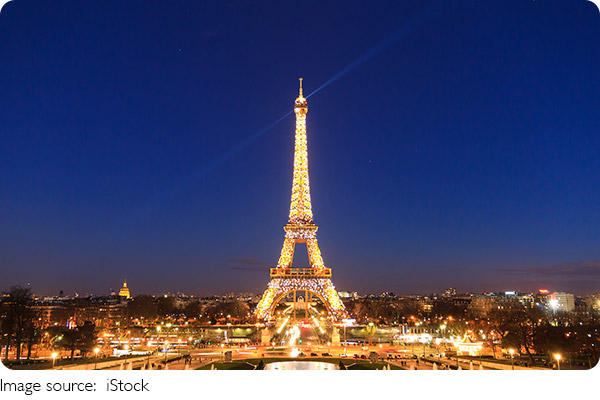
Sunrise visits (available in summer via special early-access tours) deliver the softest light and fewest crowds. Standard opening hours run from approximately 9:00 AM to midnight during summer and 9:30 AM to 11:00 PM in winter. The Tower sparkles with thousands of lights for five minutes every hour on the hour after dark—best viewed from the Trocadéro plaza across the Seine, which offers the iconic front-facing perspective. Sunset from the second floor or summit creates some of the most dramatic photographs possible in Paris, with the city transitioning from golden afternoon light to illuminated nightscape.
Seine River Cruise
One-hour sightseeing cruises depart from piers near the Tower throughout the day, passing Notre-Dame, the Louvre, and the Grand Palais. Standard sightseeing tickets cost approximately $14 to $19 (€13 to €17) when booked online. Lunch cruises range from $60 to $95 (€55 to €85), and dinner cruises from $85 to $165+ (€80 to €150+). Evening cruises that coincide with the Tower's hourly light display are particularly popular. The Bateaux Mouches and Bateaux Parisiens lines depart most frequently from the area nearest the Tower.
Beyond the Tower
The Louvre—the world's largest art museum—charges approximately $24 to $35 (€22 to €32) depending on visitor category, with timed-entry reservations now mandatory. The Musée d'Orsay (Impressionist masterworks) costs approximately $18 (€16). The Champs-Élysées, Arc de Triomphe (rooftop access approximately $15 / €14), and the Tuileries Garden are within walking distance of each other. The Montmartre district—reached by Metro Line 2—offers cobblestone streets, artist studios, and hilltop panoramic views. Combining a Paris Museum Pass ($55 to $80 / €52 to €78 for two to four days) with a Navigo weekly transport pass ($34 / €30.75) provides the most cost-effective strategy for intensive sightseeing.
Getting Around
The Paris Metro is fast, affordable, and connects virtually every major attraction. A single ticket costs approximately $2.35 (€2.15). The Navigo weekly pass at $34 (€30.75) provides unlimited rides on Metro, bus, RER, and tram throughout the city. The Bir-Hakeim Metro station (Line 6) is a five-minute walk from the Tower. The Trocadéro station (Lines 6 and 9) offers the famous approach with the Tower framed perfectly ahead. Walking along the Seine between major landmarks is one of the finest free experiences in the city—the riverbank paths are pedestrian-only in many sections.
Where to Stay
Paris accommodation spans every budget. Hostels in Montmartre start from approximately $28 to $65 (€25 to €60) per night for dormitory beds. Budget hotels throughout the city range from $88 to $143 (€80 to €130). Mid-range hotels in central arrondissements cost $165 to $330 (€150 to €300) nightly. Staying in neighborhoods slightly outside the tourist core—the 11th, 18th, or 20th arrondissements—delivers lower rates while keeping Metro access to all major sights within 15 to 20 minutes. Booking two to three months ahead for peak season (June through September) is standard practice.
Eating Well
The bakery culture makes affordable eating effortless. A fresh croissant costs $1.30 to $2.20 (€1.20 to €2). A baguette sandwich from a boulangerie runs $5 to $8 (€4.50 to €7). Sit-down lunch at a neighborhood bistro costs $14 to $25 (€13 to €22) for a two-course formule. Picnicking with bakery bread, market cheese, and fruit in the Champ de Mars or Tuileries Garden is a Parisian tradition that costs under $12 (€11) per person and provides one of the city's best free dining experiences—with the Tower as your backdrop.
Lykkers, the Eiffel Tower is the structure that defines Paris in the global imagination, but the city it looks down upon is the real masterpiece—a place where every neighborhood has its own character, every Seine bridge frames a different perspective, and every bakery smells like it just pulled something extraordinary from the oven. If you could watch one sunset from one landmark in the world, would the Eiffel Tower be your choice—or does another view hold your heart?