The Needle and the Rain

Elena Rossi
| 08-07-2026
 · Travel team
Friends, on the edge of Puget Sound in the Pacific Northwest, a city of glass towers and salt-air waterfront districts spreads beneath a skyline dominated by one futuristic structure. The Space Needle—built for the 1962 World's Fair—rises 184 meters above Seattle Center, offering 360-degree views that frame the city, Mount Rainier, the Olympic Mountains, and Elliott Bay in a single slow-turning panorama. But Seattle extends far beyond one tower—this is a city of market culture, independent coffee roasters, glass art, and musical heritage.
Space Needle Views
The Space Needle observation deck delivers the Seattle skyline's defining perspective—the downtown towers, the waterfront, ferries crossing Elliott Bay, and Mount Rainier floating on the southern horizon when skies are clear. General admission tickets cost approximately $35 to $55 depending on season and time of day. Booking online in advance through the official spaceneedle.com website secures preferred time and avoids potential sell-outs during summer peak season. The observation deck features floor-to-ceiling glass walls and a rotating glass floor called "The Loupe." A combo ticket with neighboring Chihuly Garden and Glass saves approximately 20 to 25 percent—typically $50 to $65 for both.
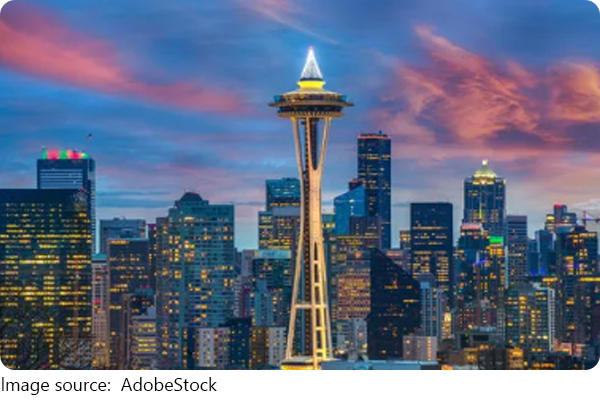
Skyline for Free
The most photographed view of the Seattle skyline—with the Space Needle centered against the downtown towers and Mount Rainier behind—is available for free at Kerry Park in the Queen Anne neighborhood. The park is open daily from 6:00 AM to 10:00 PM, with no entrance fee. Sunset visits create the most dramatic lighting. Gas Works Park, on the northern shore of Lake Union, offers a different skyline perspective across the water, with the Space Needle and downtown reflected in the lake on calm evenings. The Sky View Observatory at the Columbia Center—the Pacific Northwest's tallest public viewing area at the 73rd floor—offers an indoor alternative at approximately $23 to $28.
Pike Place Market
Pike Place Market—operating continuously since 1907—is the oldest continuously operated public farmers' market in the United States. Entry is free. The market opens daily at 9:00 AM (some vendors open earlier), with the full market experience available by 10:00 AM. Arriving before 10:00 AM avoids the heaviest crowds. Flower bouquets start at approximately $10. Fresh seafood, artisan cheese, and local produce fill the lower levels. Beecher's Handmade Cheese offers fresh cheese curds and grilled sandwiches for $8 to $14. Fish and chips at market counters cost $12 to $18. The market's multiple levels contain dozens of independent vendors, artisan studios, and small restaurants that reward unhurried exploration.
Chihuly and MoPOP
Chihuly Garden and Glass—directly adjacent to the Space Needle—displays the blown-glass artwork of Dale Chihuly in indoor galleries and an outdoor garden. tickets cost approximately $35 online. The Museum of Pop Culture (MoPOP), housed in a distinctive Frank Gehry-designed building, explores music, science fiction, and popular culture through interactive exhibits. General admission costs approximately $25. The Seattle CityPASS ($119 to $149) bundles five major attractions—Space Needle, Chihuly, MoPOP, Seattle Aquarium, and Argosy Cruises harbor tour—at savings of up to 45 percent compared to individual tickets.
Getting Around
Seattle's Link Light Rail connects Sea-Tac Airport to downtown in approximately 40 minutes for $3. Single bus and rail rides cost $2.75 to $3.25. The ORCA regional day pass provides unlimited rides for approximately $8. The Seattle Monorail connects downtown Westlake Center to Seattle Center (Space Needle area) in two minutes for $3.50. Walking is the primary transport mode within downtown, Pike Place, and the waterfront—most major attractions sit within a compact zone. Ride-hailing apps (Uber, Lyft) are widely available, with typical downtown rides costing $8 to $15.
Where to Stay
Seattle hotel prices fluctuate significantly by season. Budget hostels and pod-style hotels offer rooms from $50 to $100 per night, including properties like The Belltown Inn and Pod-style options. Mid-range downtown hotels cost $150 to $280 nightly during summer peak and $100 to $180 during winter off-season. The citizenM Seattle hotel offers modern, tech-focused rooms from $130 to $220. Staying in Queen Anne, Capitol Hill, or near the airport (with Light Rail access) provides lower rates than downtown. Booking during winter (January through March) delivers rates 35 to 40 percent lower than summer cruise season.
Eating Seattle
Seattle's food identity centers on seafood and coffee. Chowder and fish tacos at waterfront counters cost $10 to $18. Sit-down seafood dinners run $25 to $50 per person. Pike Place Market offers concentrated affordable eating—chowder bread bowls, pastries, and counter meals for $8 to $16. Coffee from independent roasters costs $4 to $7. Happy hour menus at upscale restaurants (3:00 to 6:00 PM) offer premium dishes at $8 to $15 per plate.
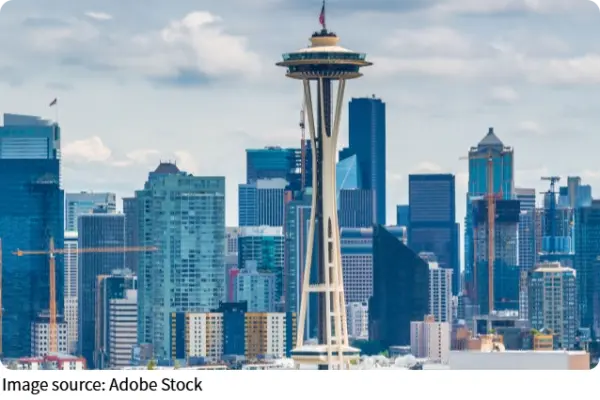
Lykkers, Seattle is a city that operates under grey skies for much of the year—but the grey makes the green greener, the coffee more necessary, the waterfront more atmospheric, and the moments when Mount Rainier appears above the clouds absolutely unforgettable. The Space Needle anchors the skyline, but the real Seattle lives in the market stalls, the coffee counters, and the ferry decks. Do you think a city's weather shapes its personality—and would you trade guaranteed sunshine for the dramatic beauty of a skyline wrapped in Pacific mist?