The Eastern Horn Awaits

Pardeep Singh
| 08-07-2026
 · Travel team
Lykkers, while photographers and travelers flock to nearby Vestrahorn on the Stokksnes Peninsula, a mountain roughly 30 to 40 minutes further east along Iceland's coastline stands in near-total solitude—equally dramatic, arguably more photogenic in certain conditions, and visited by a fraction of the crowds. Eystrahorn, the "Eastern Horn," rises in dark, layered ridges of gabbro and granophyre rock above the Atlantic shoreline near the Hvalnes Lighthouse, its composition of jagged peaks, crashing waves, and raw coastal scenery offering a version of Iceland's southeast coast that feels genuinely undiscovered.
Hvalnes Lighthouse
The best access point for Eystrahorn is the parking area near the orange Hvalnes Lighthouse on Route 1. No entrance fee is required—unlike neighboring Stokksnes, Eystrahorn sits on public land. The lighthouse itself, a small but brightly painted structure, serves as a compelling foreground element for photographs of the mountain rising behind it. The rocky coastline surrounding the lighthouse is explorable on foot—rough terrain but no technical climbing required. Allow two to three hours to fully explore the viewpoints, shoreline pools, and rocky outcrops around the base of the mountain.
Photography Opportunities
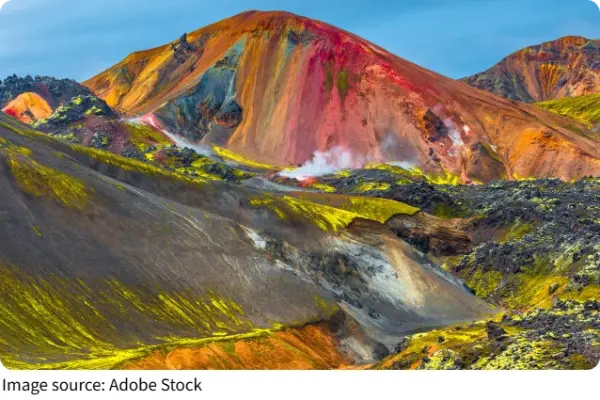
Eystrahorn's rock composition gives it unique color properties—rich ochre, deep grey, and dark brown tones that glow spectacularly in late afternoon light, particularly during golden hour when the mountain's layered ridges create dramatic shadow patterns. Rocky tide pools along the shore provide natural foreground elements for long-exposure compositions. The absence of large crowds means extended, uninterrupted shooting sessions are standard. Wide-angle lenses capture the mountain-to-ocean scale, while telephoto lenses isolate individual ridgelines and textures. Winter sessions offer the possibility of northern lights arcing above the peaks—the minimal light pollution along this stretch of coast makes aurora viewing exceptional.
Combining Both Horns
The most rewarding approach to this stretch of Iceland's southeast coast combines Vestrahorn and Eystrahorn in a single day. Visiting Vestrahorn (entrance fee approximately $9 / 1,100 ISK) for sunrise captures the famous mirror reflections on the black sand tidal flat. Driving east to Eystrahorn for late afternoon and sunset then delivers a completely different atmosphere—rougher terrain, Atlantic waves, and the warm tones of a different rock composition. The two sites complement each other perfectly, and the 30- to 40-minute drive between them follows a beautiful stretch of Route 1 with coastal views throughout.
Weather Preparation
Iceland's southeast coast is among the windiest and most weather-variable regions in the country. Wind speeds at Eystrahorn can exceed 80 kilometers per hour without warning, and horizontal rain is common even during otherwise clear days. Waterproof outer layers, insulated base layers, windproof gloves, and sturdy hiking boots are essential regardless of season. Protecting camera equipment from salt spray and sand requires lens cloths, weather-sealed housing, and care when changing lenses. Spare batteries are critical—cold temperatures drain lithium batteries significantly faster than normal conditions.
Where to Stay
The town of Höfn, approximately 30 to 45 minutes west of Eystrahorn, serves as the nearest accommodation base. Budget guesthouses in Höfn start from approximately $110 to $150 per night. Mid-range hotels range from $130 to $260 nightly, many offering mountain or harbor views. The Viking Café Guesthouse at Stokksnes—located between the two mountains—costs approximately $230 to $300 per night including breakfast and unlimited Vestrahorn access. Camping near Höfn costs approximately $15 to $20 per person per night. For self-catering travelers, Höfn's supermarkets (Krónan, Nettó) offer groceries at $15 to $25 per day—essential budget strategy in Iceland where restaurant meals average $25 to $50 per person.
Getting There
Eystrahorn sits approximately 500 kilometers east of Reykjavík along Route 1, roughly a six-hour drive. Car rental from Reykjavík starts at $60 to $160 per day, with a 4WD recommended for comfort and gravel road confidence. Iceland's Kilometer Tax adds approximately $0.07 per kilometer to driving costs. Fuel is expensive at approximately $2.30 to $2.50 per liter. Domestic flights from Reykjavík to Höfn (when available) cost $150 to $300 one way and reduce travel time to under an hour, though rental car availability in Höfn is limited and should be booked in advance.
When to Visit
Summer (June to August) delivers the midnight sun—extended golden hours for photography and the most comfortable hiking temperatures of 8 to 15 degrees Celsius. Autumn (September to October) brings moody skies, dramatic cloud formations, and the first aurora sightings. Winter (November to March) offers the strongest northern lights season and snow-dusted peaks but the harshest conditions—shorter daylight hours (as few as four to five in December) and unpredictable road closures require flexible scheduling.
Readers, Eystrahorn is the kind of place that rewards travelers who look beyond the famous stops—the ones willing to drive 30 extra minutes past the crowds to find a mountain that glows in colors the popular guides overlook. Iceland's southeast coast has room for both the celebrated and the secret. Which would you rather photograph—the mountain everyone knows, or the one almost no one visits?