The EV Revolution Is Here

Darius
| 26-05-2026
 · Automobile team
Electric vehicles are rapidly becoming a major part of the global automotive market as technology improves and adoption continues to rise.
Electric vehicles spent years being written off as expensive niche products for early adopters.
That reputation is increasingly hard to defend. Global EV sales grew more than fiftyfold over the past decade, and more than one in five new passenger cars sold worldwide are now electric.
That number is expected to continue increasing steadily. The question has shifted from whether EVs will become mainstream to how fast the rest of the world catches up.
Where the Growth Is Actually Happening
The story of EV adoption right now is not a uniform global trend — it varies dramatically by region.
One country currently accounts for over 60% of global EV sales, driven by competitive pricing, strong government support, and a manufacturing base with few rivals. More than half of vehicles sold there are already electric, and increasing domestic competition is pushing prices down further.
Europe is growing again after a period of slower momentum, when several governments reduced subsidies and sales stagnated in some markets.
One leading market has reached near-total electrification, with battery-electric vehicles accounting for an extremely high share of new vehicle sales.
New emissions regulations are pushing automakers to accelerate their electric lineups more aggressively.
The market picture elsewhere is more complicated. Sales growth has moderated, and policy uncertainty around government incentives has created hesitation among some consumers and manufacturers.
Meanwhile, emerging markets are seeing some of the fastest EV growth rates globally as more affordable models target local buyers.
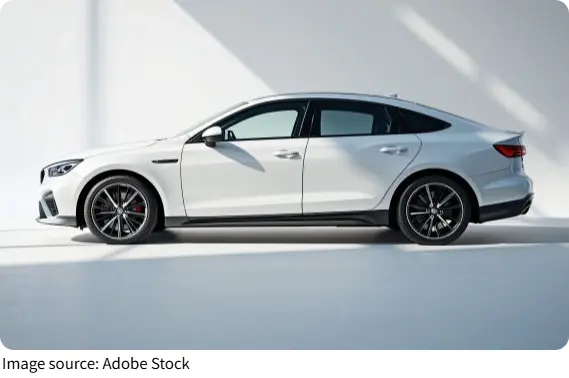
Prices Are Finally Coming Down
For years, the upfront cost of an EV was the most commonly cited barrier to adoption.
That barrier is shrinking.
Battery packs, which account for roughly 30–40% of a vehicle's total cost, have dropped significantly in price and continue to fall as manufacturing scales up and materials science improves.
In some markets, more than 60% of EVs are already cheaper than comparable combustion-engine vehicles on a sticker-price basis.
In other regions, the economics are becoming more favorable too. Several automakers are preparing more affordable EV models targeting lower price ranges.
For buyers who consider lower fuel and maintenance costs, total ownership costs can already be competitive with or lower than petrol vehicles in many markets.
Charging Infrastructure Is Catching Up
Range anxiety — the fear of running out of charge with nowhere to plug in — was a legitimate concern for early EV owners. It is becoming less severe.
The number of public charging points globally has expanded rapidly, and the opening of charging networks to multiple vehicle brands has significantly expanded fast-charging access in several markets.
Bidirectional charging, also known as vehicle-to-grid technology, adds another dimension to the EV's role.
Some electric vehicles can send power back to homes or the electrical grid during outages or periods of peak demand.
As more EVs gain this capability, they may increasingly function as part of broader energy infrastructure.
What Still Needs Fixing
The transition is not without challenges.
Charging access remains uneven — strong in many cities but limited in some rural areas, while charger reliability still varies.
Battery supply chains continue to depend heavily on materials such as lithium, cobalt, and nickel, which raise environmental and supply-related concerns.
Solid-state batteries, which promise higher energy density and faster charging, are still largely in the development and early commercialization stage rather than mass-scale production.
Policy instability also remains a risk.
Markets where government incentives have been reduced or removed have experienced measurable slowdowns. However, ongoing technological improvements, large-scale industrial investment, and global competition among automakers continue to support long-term EV growth.
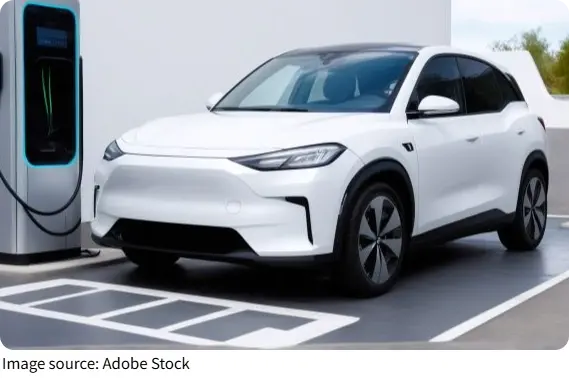
Electric vehicles are still evolving, and adoption rates will differ by region and policy environment. However, the industry has moved beyond the stage where EVs can realistically be dismissed as a passing trend. The remaining question is no longer whether electric mobility will expand, but how quickly infrastructure, affordability, and technology can keep pace with demand.