How Car Shapes Changed

Pankaj Singh
| 26-05-2026
 · Automobile team
The first cars looked like horseless carriages—upright, wooden-spoked, no doors or windscreens, built before anyone knew what a car should be.
That uncertainty didn't last long. Over the following hundred years, automotive design became one of the clearest running reflections of how culture, technology, economics, and ambition were all shifting at once.
From Function to Style: The 1920s and 1930s
The Ford Model T, introduced in 1908, established the basic template for the mass-market car: simple, affordable, functional, designed for production rather than beauty. It democratized car ownership but offered nothing in the way of visual distinction. What followed in the 1920s and 1930s was a deliberate move in the opposite direction — at least at the luxury end of the market.
The Art Deco movement shaped car design just as it shaped architecture and fashion. Smooth curves replaced boxy angles. Fenders became integrated into the body rather than bolted on separately. Chrome detailing, lavish interiors, and bespoke craftsmanship defined brands like Bugatti, Duesenberg, and Rolls-Royce. The 1936 Bugatti Type 57SC Atlantic remains one of the most visually striking objects ever built around four wheels.
Aerodynamics began to enter the conversation too — not purely for performance reasons, but because streamlined shapes simply looked like the future.

The Recovery Boom Period: When Cars Got Optimistic
The 1950s produced the most overtly theatrical cars in history. American manufacturers, riding a wave of economic expansion and an obsession with space-age aesthetics, went wild with tailfins, chrome, and two-tone paint. The 1957 Chevrolet Bel Air is the defining image of the era — wide, low, gleaming, designed to make a statement parked outside a diner.
These weren't subtle vehicles. They were expressions of confidence and abundance, and they looked exactly that. European manufacturers took a different route — leaner, sportier, more focused on driving feel. Jaguar's E-Type, Ferrari's road cars, and the Citroën DS (introduced in 1955 with its extraordinary hydraulic suspension and science-fiction silhouette) represented a different kind of ambition: speed and elegance over spectacle.
The 1970s Reality Check
Then came the oil crisis, and the party ended. Fuel efficiency became the overriding concern, and car design responded accordingly. Tailfins disappeared. Chrome was stripped away. Cars got smaller, boxier, and more practical. The Volkswagen Golf, Honda Civic, and Ford Fiesta defined this era — compact, fuel-efficient, designed around cost and consumption rather than aspiration.
Safety regulations also started shaping form in new ways. Crumple zones, stronger pillars, airbag requirements, and pedestrian impact standards — all of these placed constraints on designers that had nothing to do with aesthetics and everything to do with engineering.
The cars of the 1980s and early 1990s are often considered the least visually interesting in automotive history, a period where regulation and economic pressure squeezed the creativity out of the form.
The Digital Era and the Rise of the EV
The 2000s brought digital design tools that transformed what was possible to conceive and manufacture. Curves that would have been prohibitively complex to produce became standard. LED lighting allowed headlights and taillights to become design features in their own right rather than functional necessities with a fixed shape.
Electric vehicles pushed the conversation in a new direction entirely. Without a combustion engine and radiator to accommodate, the traditional front-heavy proportions that had defined car design for a century became optional. The hood could shrink.
The cabin could move forward. Interior packaging could change completely. Tesla's designs reflected this — cleaner, more minimal, freed from the constraints of the mechanical architecture underneath.
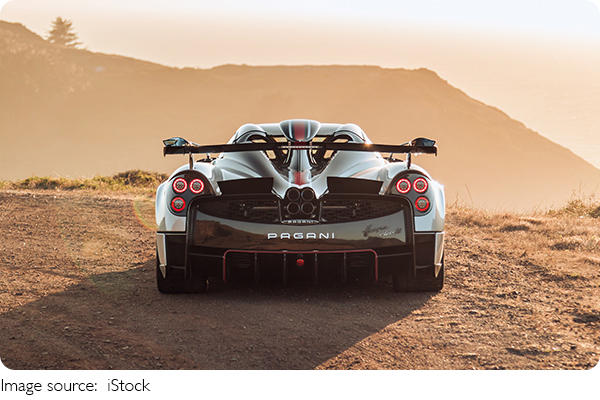
Looking further ahead, autonomous driving presents the next set of questions. If the driver is no longer the primary occupant, what does a car's interior actually need?
The answers being explored by designers right now involve rethinking the entire relationship between passengers and the space they occupy — something that may produce vehicles that look unlike anything in the previous hundred years of automotive history.