Full vs Half Helmet

Caleb Ryan
| 26-05-2026
 · Automobile team
Walk into any motorcycle gear shop, and the helmet debate is usually the same: full face feels heavy and claustrophobic, half helmet looks cooler and feels freer.
Both observations are accurate. But the safety difference between the two is significant enough that understanding it properly should come before the style decision.
What the Numbers Actually Say
Research consistently shows that helmets reduce the risk of head injury by around 37% in crashes. But the type of helmet changes that equation considerably. Studies on crash data show that roughly 34.6% of impacts occur in the chin and jaw area — a zone completely unprotected by open-face and half helmets.
Full face helmets cover this zone with a reinforced chin bar, which is specifically designed to absorb and deflect impact energy in exactly the scenarios where open-face helmets leave the rider exposed. That's not a marginal difference on paper; it's a real structural gap.
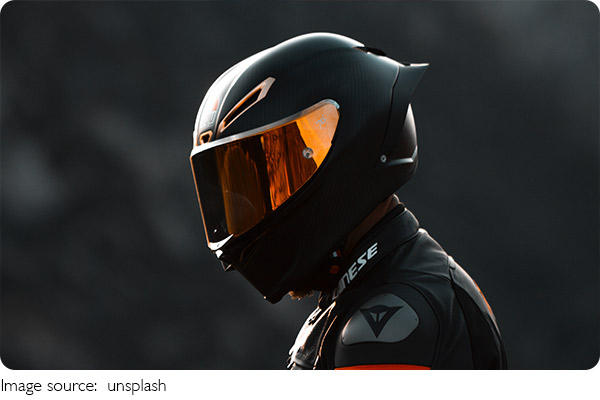
Full Face: Maximum Protection With Trade-offs
Full face helmets cover the entire head — top, sides, back, chin, and jaw — with an integrated visor blocking wind, debris, rain, and insects. Aerodynamics are better at speed, meaning less head fatigue on highway runs, and road noise is noticeably reduced. The visor system means no need for separate goggles or glasses.
Modern full face helmets have improved ventilation significantly, so the heat-trap complaint from older designs is less valid on current models. The trade-offs are real, though: they weigh 3 pounds or more, they can feel claustrophobic for some riders, and peripheral vision is slightly more limited than with open-face designs.
Open Face and Half Helmets: Comfort at a Cost
Open-face helmets cover the top, back, and sides of the head but leave the face exposed. They feel lighter, allow natural airflow, and offer better situational awareness — easier to hear traffic, easier to communicate with others. Many police departments in the US still use three-quarter helmets partly for this reason.
Half helmets cover only the top of the skull and are the smallest and lightest option available, some weighing as little as 2 pounds. The comfort is real. The reduced protection is equally real: no face shield means the rider's face catches everything the road throws at it — wind, debris, rain, and in a crash, ground contact.
What Works Best for City Riding
City riding involves lower average speeds than highway riding, more frequent stops, and a lot of heat in traffic. Open face helmets have natural advantages in this environment — easier to communicate at intersections, better airflow while sitting still, and easier to put on and take off when stopping frequently. Many urban commuters genuinely prefer them for short-distance daily use. The practical case is real.
However, the counterargument is also real: city riding involves intersection crossings, unexpected hazards, and car doors opening unexpectedly — scenarios that can produce impacts at angles a half helmet simply wasn't built to handle. For anyone regularly riding above 40 mph or mixing in highway segments, a full face helmet is hard to argue against.
The Practical Middle Ground
A modular helmet — one with a hinged chin bar that flips up — gives most of the protection of a full face with the convenience of an open face at stops. It's heavier than either, and the chin bar mechanism introduces a structural compromise compared to a fixed full face shell. But for city riders who want meaningful protection without the full commitment of a sealed helmet, it's a reasonable option worth considering.
The honest answer is that the best helmet is the one that actually gets worn consistently. An open face helmet on every ride beats a full face helmet sitting in the garage.
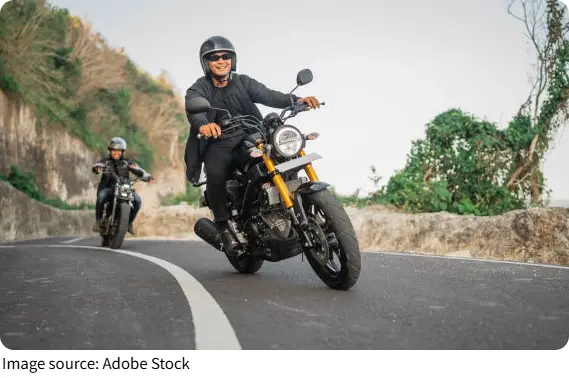
No helmet can make a crash safe. But the right one can make a serious crash survivable. The trade-off between comfort and protection will never disappear entirely — that tension is honest. What matters is understanding exactly what you are choosing. A half helmet leaves your jaw exposed.
An open face leaves your face to the road. A full face asks you to accept weight and limited visibility. Look at the numbers, try on the options, then ride with the one you will actually wear. Every single time.