AI Drives the Future

Hiro
| 27-05-2026
 · Automobile team
If you sit inside a modern vehicle today and listen closely to how it responds—adjusting steering support, reading road signs, or dimming cabin lights based on your behavior—you’re already witnessing a quiet transition, Lykkers.
Cars are no longer defined only by engines and chassis. They are becoming intelligent systems that interpret data, learn patterns, and reshape the driving experience in real time.
The shift toward AI-designed and AI-driven mobility is not about one brand or one breakthrough, but a wider transformation across the global automotive industry.
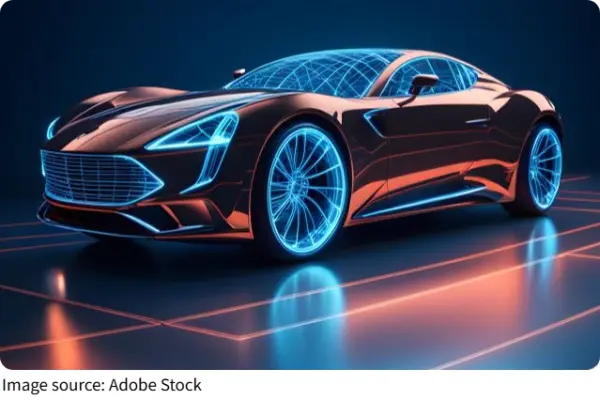
AI as a Design Partner, Not Just a Tool
In traditional automotive development, engineers relied heavily on physical prototypes and long testing cycles. Now, artificial intelligence is increasingly used to shorten and refine that process. Generative design software can simulate thousands of structural variations for components like suspension arms or battery housings, selecting shapes that balance strength, weight, and cost efficiency.
Instead of replacing engineers, AI acts like a design collaborator. It evaluates aerodynamic drag in virtual wind tunnels, predicts stress points under crash conditions, and proposes geometries that would be difficult for humans to calculate quickly. This approach is already common in electric vehicle platforms and lightweight material engineering, where every gram of weight impacts range and efficiency.
Smarter Driving Systems That Learn Continuously
One of the most visible changes is in driver assistance technologies. Modern systems can interpret lane markings, surrounding traffic flow, and sudden pedestrian movement in milliseconds using camera arrays, radar, and neural networks.
These systems are not static programs. They improve through large-scale data analysis gathered from millions of kilometers of driving conditions. Over time, they refine braking behavior, steering adjustments, and following distances based on real-world patterns rather than fixed rules.
In some regions, semi-automated driving features are already capable of handling highway navigation under specific conditions, though human supervision is still required. Regulatory agencies continue to classify these systems carefully to ensure drivers remain accountable and engaged when necessary.
Inside the Cabin: A Shift Toward Intelligent Environments
The role of AI does not end at driving control. Inside the cabin, vehicles are becoming responsive environments that adapt to human needs. Voice systems now understand natural speech rather than rigid commands.
A driver can ask for a quieter environment, and the system may reduce infotainment volume, soften lighting, and adjust climate settings simultaneously. Fatigue detection systems use cameras to monitor eye movement and steering behavior, alerting drivers when attention drops.
Some vehicles also build personalized profiles over time, remembering seat positions, preferred routes, and even climate preferences. This creates a driving environment that feels increasingly adaptive rather than manually controlled at every step.
Data-Driven Mobility and Connected Roads
AI is also reshaping how vehicles interact with infrastructure and each other. Through connected communication systems, cars can exchange information about traffic congestion, road hazards, or sudden braking events ahead. In experimental smart city environments, traffic signals and vehicles are beginning to share data in real time to reduce idle time at intersections and improve traffic flow.
This coordination reduces unnecessary acceleration and braking, which also contributes to better energy efficiency and lower emissions. The long-term vision is not just smarter cars, but smarter transportation networks where each vehicle becomes a node in a larger digital ecosystem.
Challenges That Still Need Human Oversight
Despite rapid progress, AI in automotive systems still faces important limitations. One of the biggest challenges is decision-making in unpredictable environments. Road conditions can change instantly due to weather, human behavior, or infrastructure issues that no dataset can fully anticipate.
Cybersecurity is another concern. As vehicles become more connected, they also become more exposed to digital threats. Manufacturers and researchers are working on encryption systems and isolated safety layers to prevent unauthorized access to critical driving functions.
There is also a human factor: trust. Many drivers are still cautious about handing over control to automated systems, especially in dense urban traffic. This means the transition toward full autonomy will likely remain gradual and heavily regulated.
From Machines to Intelligent Companions
The most important shift is philosophical rather than mechanical. Cars are evolving from tools that respond to commands into systems that interpret context. They are beginning to understand patterns in driving behavior, environmental conditions, and passenger needs.
This does not mean replacing human control entirely. Instead, it points toward a future where driving becomes a shared process between human intuition and machine intelligence. The car supports, predicts, and adapts—but the human remains part of the decision loop.
Artificial intelligence is reshaping the automotive world in ways that go far beyond automation. It is changing how vehicles are designed, how they learn on the road, and how they interact with the people inside them. From engineering simulation to adaptive cabin environments and connected traffic systems, intelligence is becoming part of the driving experience itself.
The future of cars is not just about reaching destinations faster—it is about how seamlessly technology understands the journey itself.