The Big Red Island
Finnegan Flynn
| 08-07-2026
 · Travel team
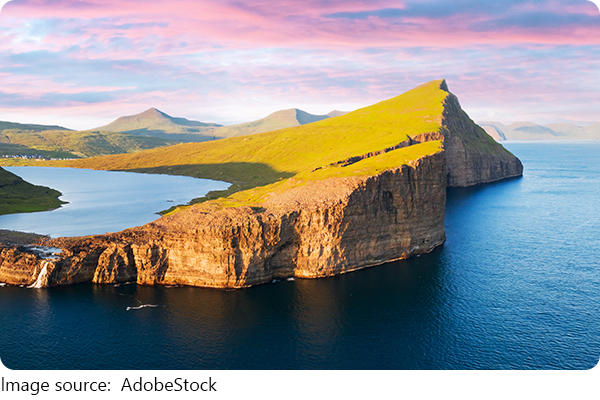
Friends, at the far northern reach of the British Isles, connected to mainland Shetland by a single small road bridge, a compact island of red granite cliffs, heather-covered moors, and hidden shingle bays sits in the Atlantic swell almost entirely alone. Muckle Roe—the "Big Red Island" in Norse—is one of Shetland's most striking landscapes, a place where the rock itself glows warm crimson against grey skies and green seas, where footpaths cross empty moorland between lochan-studded hills, and where the only crowds are seals hauled up on boulder beaches.
The Hams
The island's headline attraction is the Hams of Muckle Roe—four small bays tucked into the northwest coast, accessible only by hiking across open moorland (no road reaches them). The walk from the nearest parking area takes roughly 45 minutes to an hour each way across uneven terrain, with no marked trail for much of the route. The reward is a series of red shingle beaches backed by dramatic sea cliffs, natural arches, and rock stacks carved by Atlantic storms. The Hams are free to visit, rarely visited, and almost always completely empty—the kind of place where footprints in the wet shingle might be the only human traces visible.
Coastal Hiking
Beyond the Hams, Muckle Roe's coastline delivers some of the most dramatic cliff scenery in Shetland. Sea stacks including Erne Stack and Swabi Stack rise from the surf like granite sentinels. Natural arches frame views of open ocean, and deep geos (narrow chasms) cut into the cliffs at intervals. The full coastal circuit of the island covers approximately 12 to 15 kilometers and takes most walkers five to seven hours at a leisurely pace. Ward Hill, the island's central high point, offers 360-degree panoramic views across mainland Shetland, the open Atlantic, and—on exceptionally clear days—the distant outline of Fair Isle. No entrance fees or permits are required.
Wildlife Encounters
Muckle Roe's quiet coastline and undisturbed waters attract a rich variety of marine life. Seals are regularly spotted hauled up on rocks or swimming in the bays. Otters inhabit the island's sheltered eastern shores. Offshore, porpoises and occasionally orcas pass through the surrounding waters during migration seasons. Bringing binoculars enhances any walk significantly—the island's low human footprint means encounters often happen at close range.
Getting There
Muckle Roe is connected to the Shetland mainland by a road bridge near the village of Busta, roughly 30 minutes north of Lerwick by car. Most visitors reach Shetland via the NorthLink overnight ferry from Aberdeen, which takes approximately 12 to 14 hours. single fares range from approximately $37 to $57 (£29 to £44), with car transport costing $150 to $200 (£117 to £157) one way. Two-berth cabin accommodation on the ferry runs $174 to $243 (£136 to £190). Alternatively, direct flights from Edinburgh, Glasgow, and Aberdeen to Sumburgh Airport take roughly one to two hours, with advance fares from approximately $65 to $180 (£50 to £140) one way. Car rental from Lerwick or Sumburgh Airport starts at approximately $50 to $80 (£40 to £60) per day—a vehicle is essential for exploring Shetland and reaching Muckle Roe.
Where to Stay
Muckle Roe itself has limited but unique accommodation. Self-catering properties on the island—including the award-winning Muckle Roe converted heritage property and Orwick Lodge—offer two- to four-person stays from approximately $100 to $180 (£80 to £140) per night, with kitchen facilities, sea views, and extraordinary quiet. On the nearby mainland, Busta House Hotel offers comfortable rooms from approximately $155 to $250 (£120 to £195) per night with dinner available. The town of Brae, five minutes from the bridge, provides additional guesthouses from $90 to $155 (£70 to £120). Lerwick, Shetland's main town, offers the widest selection—hostels from $32 to $50 (£25 to £40), guesthouses from $77 to $130 (£60 to £100), and hotels from $155 to $360 (£120 to £280) nightly.
Practical Essentials
Shetland weather is genuinely unpredictable regardless of season—waterproof layers, sturdy hiking boots, and wind-resistant clothing are non-negotiable even on clear summer days. Umbrellas are largely useless in Shetland's horizontal wind. Mobile phone signal exists in Lerwick and larger villages but drops to nothing on Muckle Roe's remote western coast. Carrying a paper map (available from Lerwick tourist office) is wise for any off-trail coastal walking. The Scottish Outdoor Access Code grants responsible access to all land, but visitors should close gates, keep clear of livestock, and respect ground-nesting seasons (April to July).
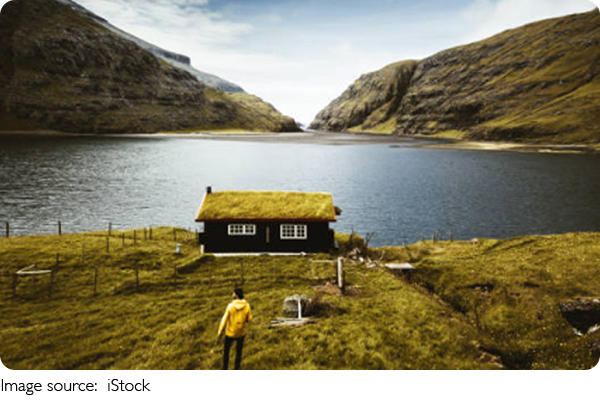
Lykkers, Muckle Roe is not a destination anyone visits accidentally—it takes a ferry, a drive, a bridge, and a willingness to walk across open moor to reach its wildest corners. But the red granite glowing against grey seas, the empty beaches with no footprints but your own, and the silence that settles over the island like a second sky make every step of the journey worthwhile. What is the most remote coastline you have ever walked, and would you trade it for one made of crimson stone?