Small Hands, Growing Minds

Sofia Alvarez
| 25-05-2026
 · Lifestyle team
When we observe children in daily life, we often focus on speech, height, or learning speed. However, one of the most revealing signals is actually much simpler: how they use their hands.
Before any formal learning begins, hand movements already show patterns of attention, curiosity, and patience. From how a child picks up objects to how they finish small tasks, we can quietly see how their thinking process is developing in real life.
Hands as a Communication Bridge
Hands are rich in sensory nerves, constantly sending detailed information back to the brain. A large part of the brain is dedicated to processing movement and touch information from the hands.
When children explore more through touch—grasping, adjusting, and experimenting—the brain receives more structured feedback. Over time, these repeated signals help build stronger neural connections, which can support more efficient coordination and responses during everyday activities.
"Fine motor skills are more than just ‘using hands’ – they are a gateway to independence, creativity, and life-long learning." — Early Excellence.
Four Everyday Signals of Hand–Brain Coordination
We can observe four simple and practical signals in everyday life:
- First, finger control. Children who stack blocks neatly, draw steady lines, or manage small objects smoothly may demonstrate stronger fine-motor coordination skills.
- Second, curiosity through touch. Some children naturally want to feel, turn, or test objects. This may reflect active exploration and sensory engagement.
- Third, quick response. When given simple instructions, some children can quickly locate and pick up objects, showing coordination between attention and movement.
- Fourth, patience in completion. Tasks like puzzles or bead threading require time, and children who stay calm and focused may demonstrate stronger persistence during learning activities.

Why Stable Hands Support Learning Development
Research in child development shows a connection between fine motor skills and learning ability, including reading, writing, and early math skills.
When hand movement is stable, the brain also practices planning, memory, and self-control. These functions work together during writing or problem-solving. Rather than directly causing stronger thinking skills, fine motor activities may help support cognitive development because these abilities often develop together.
Daily Play as Natural Learning
Many simple daily activities can naturally support this development.
When children touch different materials like sand, water, or clay, they learn about cause and effect. Building blocks help them understand structure and space. Sorting small objects teaches patterns and logic.
These experiences may look simple, but they quietly build important cognitive foundations through repeated action and feedback.
Movement Speed and Attention Flow
Fast and accurate hand responses can be associated with stronger attention control, although development varies from child to child.
When a child responds quickly to a request, the brain coordinates attention, decision-making, and movement together. This process helps strengthen executive function skills, which are important for learning and classroom focus.
Patience Through Small Tasks
Small activities such as puzzles or threading beads may seem basic, but they are powerful learning tools.
They teach children how to wait, adjust, and continue even when something becomes difficult. Over time, this can help build patience, planning ability, and self-monitoring skills.
Early Development and Growth Windows
In early childhood, especially for children who develop at a slightly different pace, hand skills like grasping play an important role.
Grasping requires coordination between vision, touch, and muscle control. With repeated practice, many children gradually improve these abilities, showing steady progress in daily functioning and learning-related skills.
Simple Home Activities We Can Try
We can easily support hand development in daily life without special tools.
In the kitchen, children can sort small ingredients or mix simple textures. In the living room, blocks and puzzles help coordination. At the table, using spoons or simple picking tools builds control.
Dressing tasks like buttons and zippers also encourage independence. Outdoor or balcony activities such as planting seeds or touching soil provide rich sensory experiences.
Short and consistent sessions are enough—around 10–15 minutes at a time—with calm guidance and clear goals.
When Extra Attention May Be Needed
If a child consistently avoids using their hands, shows a strong imbalance between both sides, or struggles with basic daily tasks compared with peers, a professional evaluation may be helpful.
However, most children simply need more opportunities to practice. With time and experience, the brain can adapt and improve through repetition and learning.
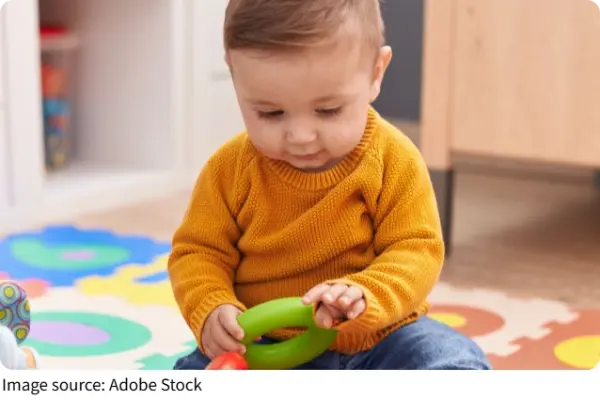
Small Hands, Growing Potential
Hands are not just tools for movement—they are an important bridge to child development. Through everyday exploration, children build thinking skills, attention control, and problem-solving abilities.
For parents and caregivers, the most important step is simple: provide children with meaningful opportunities to use their hands during everyday activities.
So Lykkers, remember that small actions today may help build stronger learning foundations for tomorrow.