3 Cavy Sounds Decoded

Declan Kennedy
| 25-05-2026
 · Animal team
Ever found yourself pausing in the middle of the day because your little “Cavy” suddenly started making a full concert of sounds from the corner of the room, Friends? If you’ve ever wondered whether those squeaks, whistles, and tiny chirps actually mean something—or if your pet is just being dramatic—the truth is far more fascinating.
Cavies are not quiet background pets. They are highly social, emotionally expressive animals with a communication system that starts developing only a couple of weeks after birth. What sounds like random noise is actually a structured language shaped by survival instincts, social bonding, and long history as prey animals in the Andes.
Why Cavies Are Natural Communicators
In the wild, cavies survived by staying in close-knit groups. Silence was never an option. A single warning call could mean the difference between safety and danger. Because of this background, domestic cavies still rely heavily on vocal signals paired with body language. Ear position, freezing behavior, small hops, and even subtle whisker movement often reinforce what their voice is saying.
Unlike many pets that rely mostly on scent or posture, cavies combine sound and movement into a surprisingly complex communication style. Over time, they even learn that humans respond to certain sounds—especially those linked to food or attention.
1. Wheeking – The “I Know You Heard Me” Call
This is the most iconic sound in a cavy’s vocabulary. It’s sharp, rising, and often repeated with increasing urgency. Wheeking usually appears when a cavy anticipates something rewarding. The sound often builds gradually—starting as a short squeak and escalating into a sustained call. Many owners notice it most strongly during food preparation, fridge opening, or rustling bags.
But wheeking is not only about hunger. Some cavies use it when they recognize their caregiver’s footsteps or voice, especially if they associate those cues with interaction or treats. It is essentially a learned “attention magnet” shaped by experience. If you respond consistently, your cavy quickly learns that wheeking is an effective way to initiate interaction—so expect it to become part of your daily routine.
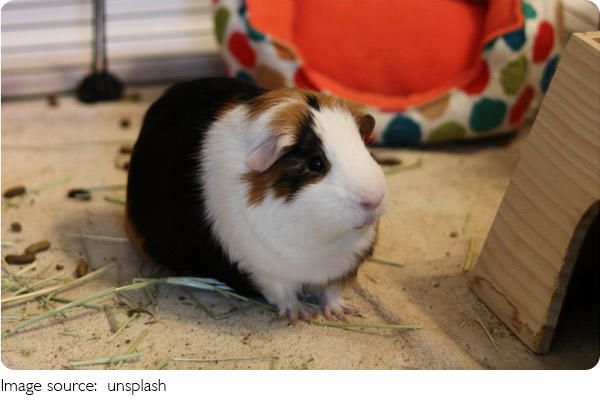
2. Chutting – The Sound of Comfort and Curiosity
Chutting is far more subtle than wheeking. It is soft, rhythmic, and often blends into background noise unless you are paying close attention. This sound usually appears when a cavy feels safe while exploring. You might hear it during slow wandering across a room, gentle foraging in hay, or relaxed social time with another cavy. It can also appear when your pet is mentally engaged—almost like quiet commentary while investigating something new.
A particularly special moment is when chutting happens during handling. If your cavy produces this soft rhythm while resting on your lap, it often signals emotional comfort and trust in that moment. Think of it as a “I’m okay here” soundtrack.
3. Shrieking or Squealing – A Signal of Distress
This is the sound every cavy caregiver learns to recognize instantly. It is sharp, sudden, and emotionally intense. Unlike wheeking or chutting, shrieking is not casual communication. It is a direct alarm response, often linked to fear, pain, or immediate discomfort. The sound can repeat rapidly if the source of distress continues.
Triggers may include accidental rough handling, sudden loud noises, feeling trapped, or conflict with another cavy. Sometimes it may even signal hidden injury or illness that is not immediately visible. When this happens, the priority is calm observation. Check the environment for hazards, ensure the cavy is safe and separated if needed, and gently assess for signs of injury or stress. If the cause is unclear or the behavior continues, veterinary attention is essential.
Reading Between the Sounds: Body Language Matters Too
Vocalizations never stand alone. A cavy’s message becomes clearer when you observe posture and behavior together.
- A relaxed cavy often pairs soft chutting with slow movement and loose posture
- An alert cavy may freeze briefly before vocalizing
- A distressed cavy may press close to the ground or attempt to escape while vocalizing
Learning these combinations helps you interpret not just what your cavy says—but how strongly they feel it.
Building Better Communication With Your Cavy
Understanding sounds is only the beginning. Cavies quickly learn patterns from their environment. If vocal calls consistently lead to food, attention, or comfort, they become more confident communicators. To strengthen trust:
- Respond calmly instead of reacting loudly
- Keep routines predictable
- Spend quiet time observing before interacting
- Allow your cavy to approach you first when possible
Over time, you’ll notice that communication becomes two-sided rather than one-sided.

For new and experienced cavy caregivers alike, these vocalizations are more than noise—they are emotional signals shaped by instinct, learning, and connection. So, the next time your cavy calls out, pause for a moment and listen carefully. Is it excitement, comfort, curiosity, or distress? The answer is usually right there in the tone, rhythm, and context.