From Jumping to Calm
Pardeep Singh
| 25-05-2026
 · Animal team
When we come home and see a dog rushing toward us with excitement, it often feels heartwarming at first. This behavior usually shows happiness and strong attachment.
However, when jumping becomes a daily greeting habit, it may lead to discomfort or even accidental bumps, especially in busy home environments or around visitors.
So how do we guide this energy in a gentle and effective way? We can explore several simple training methods that match different ages, sizes, and personalities. With patience and consistency, we can help dogs learn calmer greetings while still keeping their joyful spirit.
Understanding Excited Greeting Behavior
When we look closely, jumping is often a way for dogs to express excitement and seek attention. They may try to get closer to our face or hands because this is where they feel interaction happens. Smaller dogs may jump lightly, while larger ones can unintentionally create stronger impact.
Instead of viewing this as a “bad habit” at the start, we can see it as an unbalanced expression of energy. Once we understand the reason behind it, we can guide the behavior in a clearer direction.
Calming Down Through Gentle Physical Guidance
For smaller dogs, we can respond in a calm and steady way. When they jump up, lowering ourselves to their eye level can help reduce excitement. By gently stroking the head and upper chest area, we can help them settle emotionally.
This approach works best when our body language stays relaxed. Dogs often respond strongly to tone and posture, so calm movements can encourage them to slow down naturally. Over time, they begin to associate greeting moments with quiet interaction rather than sudden jumping.
Using Clear Verbal Signals and Consistent Boundaries
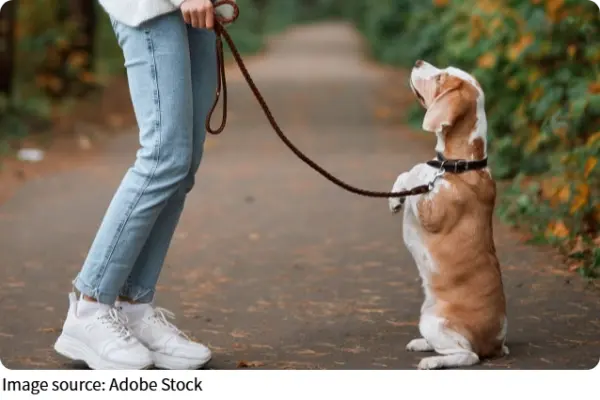
For larger dogs, we need to be more structured with communication. When a jumping attempt happens, we can block forward movement using steady hands on the front legs while keeping a safe and comfortable distance.
At the same time, short verbal cues like “No” or “Stop” can be used consistently. The key is timing—signals should come exactly when the behavior happens, so the message is clear.
Once the dog pauses and returns to the ground, we can gently acknowledge the correct behavior. Over time, this helps build an understanding that calm posture brings positive interaction, while jumping does not lead to attention.
Redirecting Attention with Simple Commands
Another effective method is redirecting focus. Before the jumping starts, we can use basic commands like “sit.” Many dogs already understand this instruction, which makes it a useful tool during greeting moments.
When the dog follows the command, we can offer a small reward such as a treat or gentle praise. This creates a connection between calm behavior and positive outcomes.
With repetition, dogs begin to choose sitting instead of jumping because it leads to quicker and more enjoyable interaction. This method works especially well in households that practice short, daily training sessions.
Managing Behavior Through Calm Repetition
Consistency plays a major role in shaping behavior. When we respond the same way every time, dogs begin to understand patterns. If jumping leads to less interaction, while calm behavior leads to attention, they will naturally adjust.
We can also use short pauses during interaction. For example, if jumping happens, we briefly step back and wait until all four paws are on the ground. Then we continue greeting. This simple cycle helps build self-control over time.
Building a Friendly Greeting Habit
With repeated practice, dogs start to realize an important pattern: calm behavior brings faster and more enjoyable connection with people. This shift does not happen instantly, but it grows through steady guidance.
We should also remember that each dog learns at its own pace. Some may adjust quickly, while others need more time and repetition. Staying patient and consistent makes the process smoother and more effective.
Lykkers, jumping is often just a burst of happiness that needs direction rather than correction alone. By combining gentle guidance, clear communication, and consistent routines, we can help dogs transform excited greetings into calm and friendly interactions. As we continue training, we may notice small but meaningful changes—more controlled greetings, better focus, and smoother daily interactions.
What has your experience been like with greeting behavior at home? Feel free to reflect and share your thoughts as we continue building better communication with our companions together.
How to Train Your Puppy to Stop Jumping
Video by Cesar Millan