Strawberries

Raghu Yadav
| 21-05-2026
 · Cate team
Strawberries are one of those fruits people take for granted.
They're everywhere — in smoothie shops, on yogurt parfaits, piled on supermarket shelves in plastic clamshells. Easy to reach for, easy to eat, and somehow still easy to overlook just how good they actually are for you.
Here's a fun starting point: botanically speaking, strawberries aren't really berries at all. The red part we eat is technically the enlarged receptacle of the flower — the actual "fruits" are those tiny seeds dotting the outside. Wild, right? But in everyday terms, who cares. They taste great and they're seriously nutritious.
The Nutrition Breakdown
Strawberries are remarkably nutrient-dense for such a low-calorie fruit. One cup provides around 90 milligrams of vitamin C — even more than many oranges — along with fiber, folate, potassium, and manganese, all for fewer than 50 calories. They’re also rich in anthocyanins, the antioxidant compounds responsible for their deep red color. Research has linked higher anthocyanin intake to improved heart health, including lower blood pressure and reduced LDL cholesterol. Harvard Health has also highlighted studies connecting greater berry consumption with lower risks of cognitive decline and dementia over time. One long-term study found that higher strawberry intake was associated with a reduced risk of developing Alzheimer’s dementia.

How to Buy the Best Ones
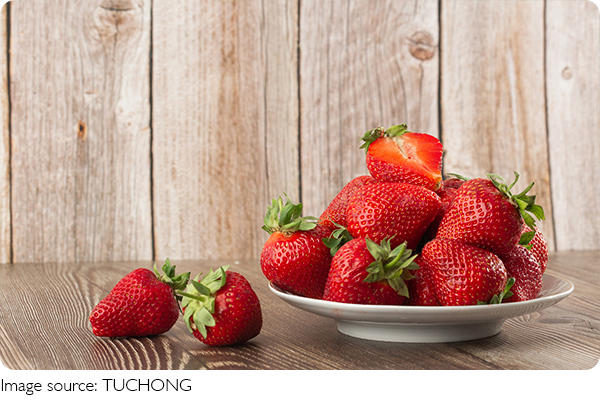
Strawberries don't ripen after picking, so what you see is what you get. Look for berries that are fully, deeply red — no white or green patches near the top. They should have a natural shine, firm texture, and bright green caps. Give the container a sniff; ripe strawberries have a distinctly sweet, fragrant smell. If there's no scent, they'll probably taste flat.
Skip any that are soft, dark, or mushy. Plan to eat them within two to three days, stored in the fridge — ideally in a single layer or two in a shallow container. They're fragile and go soft fast.
A Quick Note on Pesticides
Strawberries consistently appear on the Environmental Working Group's "Dirty Dozen" list, meaning they tend to carry higher pesticide residue than other produce. If organic is an option and within budget, strawberries are worth that choice. Either way, wash them thoroughly under running water before eating, and remove the caps — that's where most residue concentrates.
Best Ways to Eat Them
Raw and fresh, they need nothing. But tossed with a little balsamic glaze and black pepper, they're transformed. On oatmeal, in salads with goat cheese and candied walnuts, folded into yogurt, blended into a smoothie — they're endlessly flexible. Even a simple strawberry sauce (simmer with a bit of lemon juice and a touch of sugar) over pancakes or ice cream is one of those small pleasures worth making from scratch.