Green Power

Arjun Mehta
| 21-05-2026
 · Cate team
Broccoli has a reputation problem. For a lot of people, it brings back memories of overcooked, mushy florets with that distinctly sulfurous smell — the kind that fills the whole kitchen.
Not exactly inspiring. But here's the thing: badly cooked broccoli and well-cooked broccoli are almost two different vegetables. When it's done right — bright green, still with a little snap, maybe with some crisp edges from a hot oven — broccoli is genuinely good. And the nutrition behind it is hard to argue with.
The Numbers Are Real
As Dr. Howard LeWine, editor in chief of Harvard Men’s Health Watch, has noted, broccoli is one of the most nutrient-dense vegetables available. Half a cup of cooked broccoli provides more than half the recommended daily intake of vitamin C and a substantial amount of vitamin K, along with folate, potassium, iron, calcium, and magnesium — all for roughly 25 calories. Beyond its vitamin and mineral content, broccoli is rich in sulforaphane, a sulfur-containing compound that researchers have studied for its potential anti-cancer properties. Laboratory and animal studies suggest sulforaphane may help inhibit the growth of certain cancer cells, including prostate, colorectal, and lung cancers, although human research is still ongoing. Some studies have also linked sulforaphane to improved blood sugar regulation in people with type 2 diabetes and possible benefits for joint and cartilage health. While scientists are still investigating its full effects, the early findings are promising.
How You Cook It Matters
This is the part most people get wrong. Boiling broccoli — especially for a long time — causes significant nutrient loss. Vitamin C, folate, and other water-soluble nutrients leach directly into the cooking water, which usually goes down the drain.
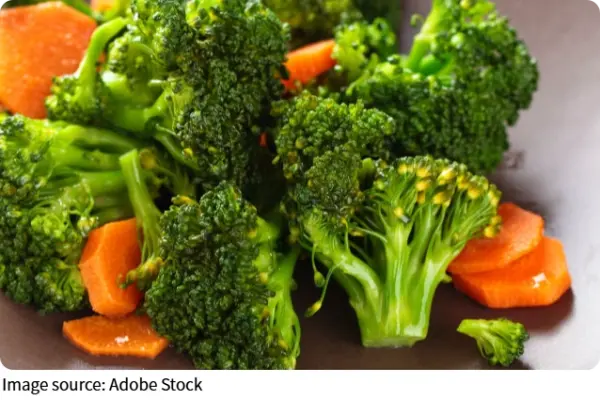
Steaming is the gentlest method and preserves the most nutrients, including broccoli's green color and its flavonoids. Microwaving is surprisingly effective too — quick heat, minimal water loss. And roasting at a high temperature (around 200°C/400°F) caramelizes the edges, which makes broccoli taste nutty and slightly sweet in a way that converts even skeptics.
If you do want soft, fully cooked broccoli, try adding it to soups near the end of cooking — that way, any nutrients released go straight into the broth rather than disappearing.
Buying and Storing
Look for broccoli with a firm stem and tight, compact florets in a deep, bright green. Avoid anything with yellowing florets — that's a sign it's past its prime. Store it unwashed in the fridge in a loosely sealed bag and use it within three to five days. Keep it away from apples and pears, which release ethylene gas that speeds up yellowing.
Frozen broccoli, for what it's worth, still retains most of its nutritional value — making it a perfectly solid choice when fresh isn't available.
Making It Work in Your Kitchen
Roasted with olive oil, garlic, and a pinch of chili flakes, it's almost addictive. Tossed raw into a salad with sesame dressing and shredded carrots, it brings crunch and freshness. Stir-fried quickly with ginger, it takes on an entirely different character. The florets absorb sauces beautifully; the stems, often discarded, are perfectly edible once the outer layer is peeled — sweet and tender with a little more cooking time.
Broccoli may not be glamorous. But cheap, nutritious, versatile, and available year-round? That's a combination worth making room for on the plate.