Dolphin Bubble Rings

Ravish Kumar
| 08-05-2026
 · Animal team
Dolphins are famous for their intelligence, but one of their most intriguing behaviors happens entirely underwater. They create bubble rings by releasing bursts of air that form spinning hoops beneath the surface.
These rings can drift, twist, and even interact with other bubbles in ways that seem surprisingly controlled. What appears to be simple play has become a serious subject of study for scientists exploring dolphin curiosity and problem-solving skills.
These rings are not random bursts of air. They require precision, timing, and body control that few marine animals can achieve. More importantly, dolphins appear to experiment with the rings, improve their technique over time, and even teach younger dolphins how to make them. What seems like a simple game may actually reveal some of the clearest evidence of advanced cognition in marine mammals.
Bubble Rings Are Surprisingly Difficult to Create
To produce a stable ring, a dolphin must force air through its blowhole in one short and carefully controlled release while underwater. The expelled air forms a spinning vortex that traps the bubble into a circular structure. If the pressure is slightly off, the ring collapses immediately or breaks apart into scattered bubbles.
That level of accuracy is remarkable because dolphins are not naturally built for underwater exhalation. Their blowholes remain tightly sealed beneath the surface through muscular tissue known as nasal plugs. Opening them requires deliberate muscular control, and timing the release correctly takes even more precision.
Researchers observing bottlenose dolphins found that many individuals position themselves strategically before making rings. Some descend deeper into the water column where surrounding pressure may help stabilize the formation. Others angle their bodies upward before releasing air, allowing the vortex to rise smoothly.
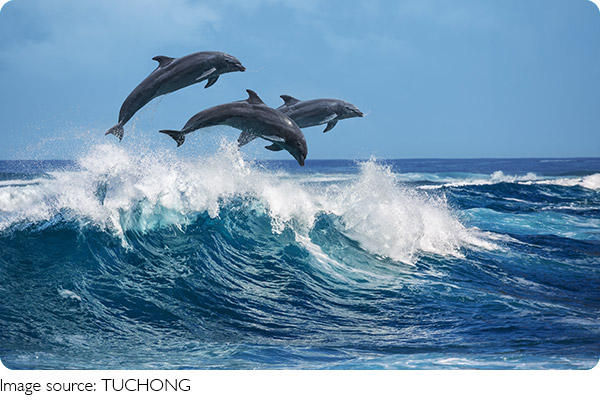
Dolphins Judge the Quality of Their Own Rings
One of the most revealing discoveries is that dolphins do not treat every ring the same way. After producing a bubble ring, they frequently inspect it and respond differently depending on how stable it appears. Some dolphins gently nudge the ring with their rostrums, while others spin nearby currents with their fins to alter its movement. Even more intriguing is their tendency to create a second ring only under certain conditions.
In multiple observations, dolphins attempted to merge two rings together into a larger structure, but they usually tried this only when the first ring remained symmetrical and intact. If the original ring formed poorly, the dolphin often abandoned the attempt entirely. That behavior points to evaluation and decision-making rather than automatic play. The dolphins appear to recognize whether the first structure is “good enough” before committing to the next action.
Young Dolphins Practice Like Human Children
Bubble-ring behavior is not instantly mastered. Younger dolphins often create unstable shapes that vanish within seconds. Their first attempts usually appear uneven or broken compared to the smooth rings made by older dolphins. Marine mammal researchers studying dolphin groups noticed that calves spend long periods watching more experienced dolphins create rings.
Mothers in particular appear highly involved during the learning process. In several documented cases, female dolphins watched their calves attempting bubble production and then immediately demonstrated the correct technique themselves. This type of observational learning is considered highly significant in animal cognition research. It suggests dolphins are not relying solely on instinct but are improving through imitation and repeated practice.
The process resembles skill development seen in primates and humans, where younger individuals refine movements by copying experienced members of the group. Scientists believe this social learning may help preserve certain behaviors across dolphin communities.
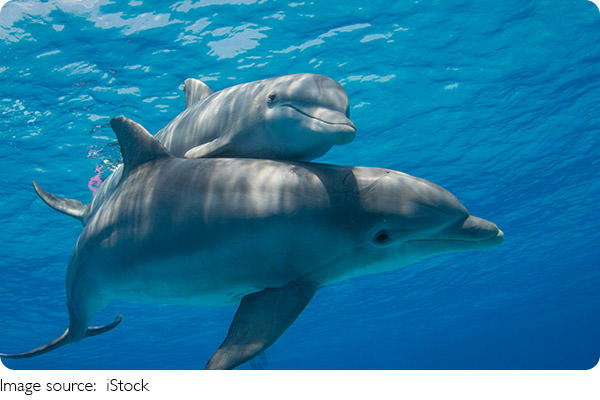
Bubble Play May Stimulate the Dolphin Brain
Play behavior in intelligent animals is rarely meaningless. In species with advanced cognition, play often strengthens memory, coordination, problem-solving ability, and social interaction. Bubble rings appear to combine all of these elements.
When dolphins manipulate the rings, they are constantly reacting to changes in water movement, pressure, and timing. Each ring behaves slightly differently depending on currents and the force used to create it. That unpredictability may be exactly what makes the activity mentally stimulating.
Some researchers believe dolphins are effectively experimenting with physics during play. By creating and modifying vortices, they observe how water responds to movement and pressure. The dolphins then adjust their actions in real time, producing different effects with each attempt.
Many animal behaviors follow rigid patterns linked directly to survival. Bubble rings are different. They serve no obvious feeding purpose, no defensive function, and no reproductive advantage. Instead, they appear driven by curiosity and enjoyment.