Marmoset Fun Facts

Ravish Kumar
| 18-03-2026
 · Animal team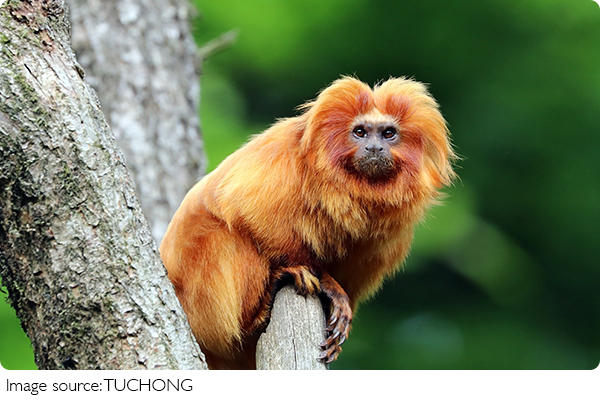
Hidden high in the rainforests of South America lives one of the most fascinating primates on Earth: the marmoset.
Although small enough to fit comfortably in a human hand, these miniature monkeys are packed with remarkable biological and behavioral traits that make them stand out among their larger primate relatives.
From their social lives to unique diets, marmosets challenge assumptions about what small animals can do in complex ecosystems.
Where They Live and What They Are
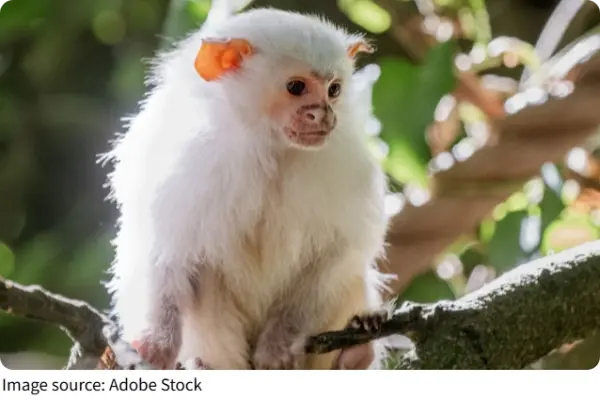
Marmosets are part of the primate family Callitrichidae and are native to tropical forests across South America. These agile tree dwellers spend their lives among branches, rarely descending to the ground. Known as New World monkeys, their bodies measure only about 15–25 centimeters long, not including their tails, which can be even longer. Their fur ranges from silky white and brown to blackish hues, often with distinctive patterns and ear tufts.
Their everyday activity is diurnal, meaning they are active during the day as they forage for what the forest offers. Living in small social groups, they navigate the complex canopy with quick, jerky movements that resemble lively squirrel like behavior.
Social Life and Family Dynamics
One of the most intriguing aspects of marmoset life is their social organization. Marmosets usually live in close knit family groups, typically consisting of a breeding pair and their offspring. These family groups can include older siblings and sometimes even extended relatives, all of whom play a role in caring for the young.
Marmosets breed differently from most other primates. It is common for marmoset mothers to give birth to twins—a rare trait among primates. While single births or even triplets are possible, twins are by far the norm.
This evolutionary strategy may help ensure the survival of infants in challenging environments. In these family groups, fathers and siblings often assist in carrying, feeding, and protecting the young, showing a strong sense of cooperative care unusual for such small primates.
Unique Physical Adaptations
Though their size is small, marmosets are physically well adapted to their arboreal lifestyle. Their hands and feet are equipped with sharp claws (instead of only nails), a trait that distinguishes them from many other primates. These claws help them cling to tree trunks and branches as they move about the canopy with agility and speed.
Interestingly, marmoset tails are not prehensile, meaning they can't grasp or hang from branches with them. Instead, their long tails function like balancing tools, allowing them to sprint and leap across complex vertical landscapes in the forest canopy.
Specialized Diet and Foraging Skills
Marmosets have a diet that reflects both adaptability and specialization. They are omnivores, consuming a mixture of insects, fruits, tree sap, gum, and small prey items. One of their most remarkable dietary adaptations relates to how they access tree sap.
Marmosets use specialized lower incisors—longer and more chisel like than those of many other primates—to gouge holes in tree bark. These holes allow sap and gum to flow out, providing the marmosets with a valuable source of energy and minerals.
This behavior not only demonstrates their physical specialization but also the ecological niche they occupy in rainforest ecosystems. By extracting sap and gum in this way, marmosets take advantage of a resource many other animals cannot easily access.
A Peek at the Smallest Monkeys
Among the various species of marmosets, one holds a particularly notable distinction. The pygmy marmoset is considered the smallest true monkey in the world. Adults of this species can measure only around 12–16 centimeters in body length and weigh around 85–140 grams—roughly the size of a deck of cards. Their tails are even longer than their bodies, aiding in balance as they leap from branch to branch.
Despite their diminutive size, pygmy marmosets are agile and quick, navigating thick canopies with remarkable ease, and showing that even the smallest primate can lead a rich, complex life in its natural habitat.
Conclusion: Tiny Primates with Lasting Lessons
Marmosets may be small, but they offer big insights into the diversity of primate evolution. Their social structures, dietary adaptations, and distinctive anatomy showcase how life can flourish under a wide range of ecological conditions. They remind us that size does not limit complexity, and that fascinating behaviors can emerge in even the tiniest of creatures.
Studying marmosets not only enriches our understanding of primate biology but also encourages us to appreciate the intricate tapestry of life in the world's rainforests—where every species, big or small, plays a meaningful role.