Tiger Hunting Mastery

Caleb Ryan
| 03-03-2026
 · Animal team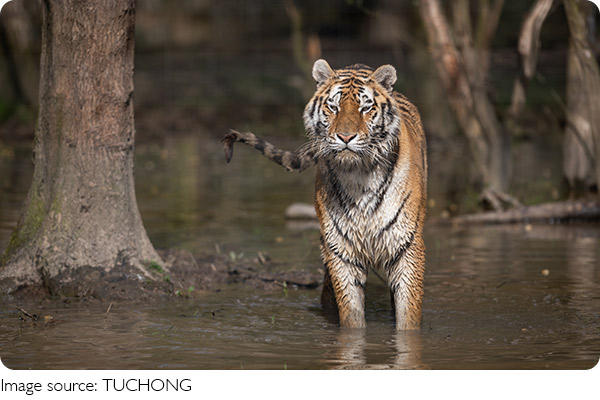
Watching a tiger move through the forest is a lesson in raw power and precision. Every step, leap, and turn demonstrates a combination of muscular strength, agility, and sensory sharpness that few predators can match.
These solitary hunters are not just large cats; they are finely tuned machines, evolved for efficiency in tracking, ambushing, and capturing prey.
Understanding their anatomy and abilities provides insight into why tigers remain apex predators in their habitats.
Muscular Strength and Physical Build
- Muscular Limbs
Tigers possess heavily muscled legs that enable explosive bursts of speed and remarkable jumping ability. A single leap can cover more than 10 meters, allowing them to ambush prey with minimal warning. Their forelimbs are especially powerful, equipped with retractable claws that can grip and immobilize prey quickly.
- Strong Jaws and Teeth
A tiger's jaw delivers a crushing bite, capable of piercing the neck or skull of large herbivores. With long, sharp canine teeth and a wide gape, tigers can secure prey efficiently, often killing with a single, decisive bite. This combination of jaw strength and dental structure is crucial for their role as apex predators.
- Flexible Spine and Core Muscles
The flexibility of a tiger's spine enhances its agility, allowing quick twists and directional changes during a hunt. Core muscles stabilize the body during leaps and sudden stops, ensuring balance and precision even on uneven terrain.
Speed and Hunting Efficiency
- Sprinting Capabilities
While not built for long-distance running, tigers can sprint up to 60 km/h in short bursts. This speed is ideal for ambushing prey, closing gaps in seconds before the target has a chance to flee. Observing hunts in the wild reveals how tigers rely on stealth and explosive motion rather than endurance.
- Stealth and Ambush Strategy
Tigers use their striped coats to blend into vegetation, approaching prey silently. By crouching low and moving carefully, they conserve energy until the final sprint. This combination of camouflage, patience, and rapid acceleration maximizes hunting success while minimizing risk.
- Strategic Pouncing
Before striking, tigers often calculate distance, trajectory, and the angle of attack. Their muscular build allows a single powerful pounce to secure prey, while their claws and teeth subdue prey swiftly. Efficiency in movement and force ensures that hunts are successful and energy expenditure is optimized.
Sensory Superiority
- Vision Adapted for Low Light
Tigers hunt primarily at dawn, dusk, or night. Their eyes have a high concentration of rod cells, enhancing low-light vision and enabling them to detect movement in near darkness. This adaptation allows them to track prey without being detected.
- Acute Hearing
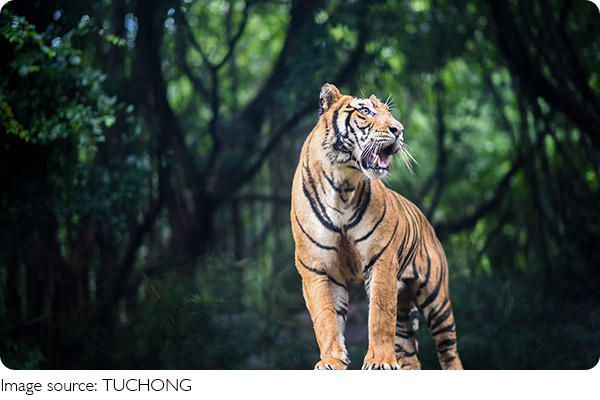
A tiger's ears can detect subtle rustles or footsteps, providing precise information about prey location. Directional hearing allows them to respond rapidly, even when the target is partially obscured by vegetation.
-Exceptional Smell
Tigers rely on scent to locate prey, detect competitors, and monitor territory. Olfactory cues guide them to vulnerable animals, while also helping avoid conflict with other tigers.
Tigers are remarkable examples of evolutionary engineering. Their combination of strength, speed, and sensory perception allows them to dominate landscapes and maintain ecological balance.
Witnessing a tiger in action is to observe both power and intelligence working in harmony—a reminder that apex predators are defined not just by size, but by the intricate integration of body and mind. Understanding these traits inspires admiration and highlights the importance of conserving habitats that allow these magnificent hunters to thrive.