Why Giraffes Have Long Necks

Caleb Ryan
| 09-02-2026
 · Animal team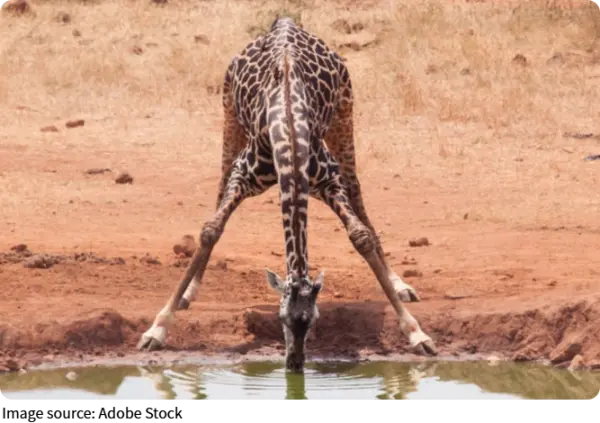
Watching a giraffe stretch its neck to nibble the leaves high above is mesmerizing.
Their graceful movements make it easy to forget how unusual their necks really are. But have you ever wondered why these animals evolved such remarkably long necks?
The answer lies in a mix of survival, feeding habits, and social behavior, all of which shaped the giraffe's iconic silhouette over millions of years.
Reaching High for Food
One of the most obvious reasons giraffes have long necks is to access food that other herbivores cannot reach.
Tall trees and sparse foliage – Giraffes mainly feed on acacia and mimosa trees, whose leaves grow high above the ground. By having long necks, they can browse foliage safely out of reach of competitors.
Seasonal advantages – During dry seasons, when lower shrubs are sparse, their elevated reach allows them to continue feeding without traveling long distances.
Efficient energy use – Instead of moving constantly to find accessible food, they can remain in a smaller area, conserving energy while still getting sufficient nutrition.
Example: A giraffe standing 5 meters tall can feed from branches that are inaccessible to zebras and antelopes, ensuring it has a reliable food source even in crowded savannahs.
Competition and Survival
Long necks also play a role in social dominance and mating.
Necking behavior – Male giraffes engage in “necking,” swinging their necks to strike rivals. The longer and stronger the neck, the higher the chances of winning contests.
Access to mates – Victorious males often gain priority access to females during mating seasons.
Social hierarchy – Neck length can signal age, strength, and status within a herd, influencing group dynamics without constant fighting.
Tip: Observing male giraffes during mating season shows that a longer neck is not just for feeding—it's also a tool for reproductive success.
Unique Anatomy Supports the Neck
A long neck requires special adaptations to function properly.
Seven vertebrae – Despite its length, the giraffe neck has only seven vertebrae, the same number as humans, but each one is greatly elongated.
Strong cardiovascular system – Their heart, weighing around 11 kilograms, pumps blood efficiently to maintain brain circulation even at great heights.
Flexible joints and muscles – Specialized ligaments and muscles support movement while reducing stress on the spine.
Practical example: The combination of a powerful heart and reinforced vertebrae allows a giraffe to bend down to drink water without fainting, a risky position for such a tall animal.
Predator Awareness
Height provides a natural advantage in spotting danger.
Panoramic view – A giraffe's elevated vantage point allows it to detect predators like lions from a distance.
Early warning system – When one giraffe senses a threat, it often signals the herd, giving others time to escape.
Herd safety – Taller individuals often act as lookouts, especially for younger members.
Example: On open savannahs, a giraffe can spot a predator over 1,000 meters away, far earlier than smaller herbivores, which increases survival odds for the herd.
Feeding Efficiency Through Neck Movement
Their long necks are not just about height—they enable unique feeding strategies.
Side-to-side browsing – Giraffes can sweep their heads horizontally across branches, covering more area without moving their legs.
Selective feeding – They choose leaves with higher nutritional value, avoiding thorns and tougher foliage.
Seasonal flexibility – During dry months, giraffes can feed on taller trees while other animals forage near the ground.
Practical tip: Watching giraffes in the wild shows how smoothly they rotate their necks to access leaves, demonstrating an energy-efficient approach to feeding.
Final Thoughts on Giraffes' Long Necks
The giraffe's long neck is a marvel of evolution, serving multiple purposes from feeding and mating to predator awareness and social signaling. Each vertebra, muscle, and ligament contributes to making the neck both flexible and strong.
When you see a giraffe calmly browsing the treetops, you're witnessing millions of years of adaptation shaped by survival and efficiency. Their necks aren't just a quirky feature—they're a perfect example of how anatomy, behavior, and environment work together to create one of nature's most striking creatures.
Next time you watch a herd, take a moment to notice how each long, sweeping neck tells a story of resilience, strategy, and evolutionary brilliance.