Mastering Throttle Control

Sofia Alvarez
| 06-01-2026
 · Automobile team
When we think about riding a motorcycle, many of us focus on speed, brakes, or cornering techniques. But one thing that is often overlooked is throttle control.
The throttle is not simply a lever to go faster—it is the essential interface between the rider and the machine. How we roll it, release it, and modulate it directly affects power delivery, bike balance, and overall predictability.
Mastering throttle control can transform an ordinary ride into a confident, smooth, and enjoyable experience.
Understanding Power Curves
Every motorcycle has a unique power curve, which shows how horsepower and torque vary with engine RPM. Most bikes have a range where torque and power rise smoothly, providing a predictable response to throttle inputs. For riders, understanding this range is crucial. Riding isn’t just about speed; it’s about knowing where the engine feels balanced and responsive.
Operating the bike within this “linear power” zone allows us to accelerate and decelerate smoothly, avoid sudden jolts, and maintain stability in any situation.
Throttle at Start
The way we control the throttle at the start has a big impact on smoothness. Some motorcycles produce minimal torque at low RPMs, which requires a careful combination of rolling the throttle and slowly releasing the clutch. Others have enough low-end torque that the bike can move forward almost at idle speed, in which case the key is modulating the clutch precisely.
Either way, smooth throttle application ensures a jerk-free launch and prevents wheel spin or sudden surges. This is especially important in crowded urban streets or when maneuvering tight corners at low speed.
Controlling Speed Without Brakes
Throttle control is not only about acceleration. By smoothly rolling off the throttle, we can reduce speed without immediately applying the brakes. Combined with proper downshifting, this allows gradual deceleration while maintaining stability and traction. In situations where abrupt braking might destabilize the bike, smooth throttle modulation helps us keep control.
Of course, brakes are essential in emergencies, but blending throttle and brake inputs ensures a smoother and safer stop. Over time, learning to decelerate using the throttle becomes an intuitive and valuable skill for all riders.
Throttle in Corners
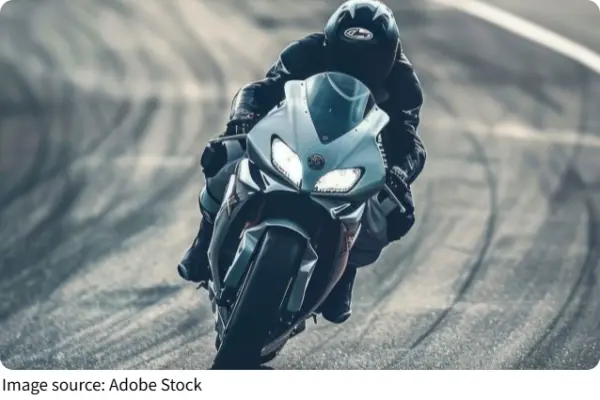
Corners are where throttle control becomes critical. As a motorcycle leans into a turn, its balance is delicate, and sudden braking or abrupt throttle changes can easily destabilize it. By modulating the throttle within the engine’s linear power range, we can control speed gradually, maintain traction, and stabilize the bike’s lean angle.
Interestingly, many cornering accidents are not caused by going too fast, but by going too slow. Insufficient speed reduces centrifugal force, forcing the bike to lean more than intended. At that moment, if the engine does not deliver enough torque, the rider cannot recover, and the bike may slide or tip over. Proper throttle management allows us to maintain the right speed and leverage the engine’s power to navigate turns safely.
Throttle During Gear Changes
Throttle control is also critical during gear shifts. Upshifting temporarily puts the engine in a no-load state, which can cause RPM spikes if the throttle is not managed properly. Downshifting without matching engine speed can create jerks or destabilize the bike. Techniques like rev-matching or “blipping” the throttle allow us to keep power delivery smooth and predictable.
Different riders may adopt different methods, but the principle is the same: the throttle determines how the bike responds in each gear. Smooth transitions between gears, combined with precise throttle inputs, are essential for maintaining stability and control in dynamic riding conditions.
The Future of Throttle Control
Gasoline engines have evolved over more than a century, but they still rely on the rider’s skill to deliver smooth, linear power. Electric motorcycles, with their inherently linear torque output, simplify this process but make throttle control no less important.
A precise hand on the throttle remains the bridge between rider and machine. Whether we ride a combustion engine or an electric bike, mastering the throttle allows us to enjoy every twist of the road, tackle varying terrains, and respond effectively to unexpected situations.
Ride Smart
Throttle control is more than just a riding skill; it is the foundation of safe and enjoyable motorcycling. By understanding how our bikes respond and practicing smooth throttle inputs, we can improve starts, stops, cornering, and gear changes. The road becomes not merely a route from point A to point B, but a playground where we can experience the bike’s capabilities and our own confidence as riders.
Smooth, deliberate throttle control allows us to fully embrace the freedom and joy of riding while staying safe and in control every mile of the way.
Motorcycle Basics: Controlling the Throttle
Video by Night Rider