Flying Cars' Future

Leila
| 24-12-2025
 · Automobile team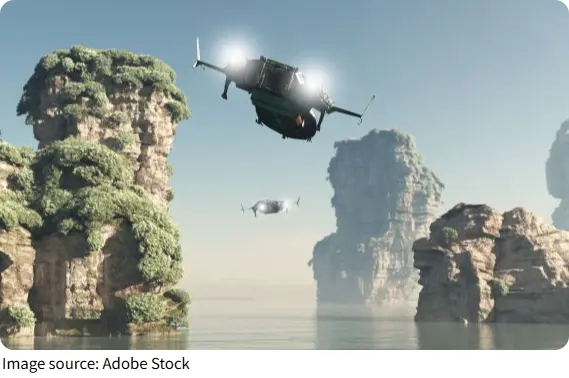
Flying cars have long been a staple of science fiction, appearing in movies and books as the ultimate symbol of futuristic transportation.
From the flying vehicles in Blade Runner to the hovercrafts in The Jetsons, the concept of flying cars has captured the imagination of millions.
Today, the question remains: is this futuristic dream on the brink of reality, or will it forever stay just that—a dream?
This article explores the potential of flying cars, looking at technological advancements, the challenges ahead, and whether we might ever see flying cars take to the skies.
The Evolution of Flying Car Technology
Flying cars are not a new concept. The idea of a flying vehicle has been around for over a century, with various inventors attempting to create the first practical design. In the early 20th century, the development of vertical take-off and landing (VTOL) aircraft offered a glimpse into the possibilities of flying cars.
However, early designs were impractical, heavy, and lacked the necessary propulsion systems to make them a viable alternative to traditional cars or airplanes.
In recent years, however, advances in materials science, battery technology, and electric propulsion systems have reignited interest in flying cars. Companies such as Terrafugia, PAL-V, and AeroMobil are at the forefront of developing these vehicles, with prototypes already flying in test programs.
The focus has shifted to electric-powered flying cars, which are more sustainable and have lower operating costs compared to traditional fuel-powered aircraft.
The concept of "urban air mobility" (UAM) has gained traction, with the goal of creating an air transportation system to relieve congestion on the ground. These vehicles, often referred to as eVTOLs (electric vertical takeoff and landing aircraft), are designed to operate in urban environments, providing short-distance travel between cities or within metropolitan areas.
Several major aviation companies have shown interest in this emerging technology, investing heavily in research and development.
The Challenges Facing Flying Cars
Despite the progress made, the development of flying cars faces several significant challenges. One of the biggest hurdles is regulatory approval. The aviation industry is heavily regulated, and integrating flying cars into existing airspace would require extensive changes to current regulations.
The Federal Aviation Administration (FAA) and other international regulatory bodies would need to establish new safety standards, air traffic control systems, and pilot certification requirements for flying car operators.
Safety is another critical issue. Flying cars, like airplanes, would need to meet stringent safety standards to ensure they can handle emergencies, avoid mid-air collisions, and perform reliable landings. In addition, the vehicles themselves would need to be equipped with advanced navigation systems, radar, and sensors to detect obstacles and other aircraft in the vicinity.
Moreover, the environmental impact of flying cars remains a concern. While electric propulsion systems promise to reduce emissions, flying cars would still require large amounts of energy, particularly in the form of batteries. The energy density of current batteries is a limiting factor, and significant advancements in battery technology would be necessary to make flying cars practical for everyday use.
Additionally, concerns about noise pollution and the potential impact of thousands of flying vehicles in urban areas would need to be addressed.
The Economic and Social Impact
The potential impact of flying cars on society is both exciting and daunting. On the one hand, flying cars could revolutionize transportation, reducing traffic congestion, shortening commute times, and providing new opportunities for mobility. With the ability to bypass ground-level infrastructure, flying cars could offer a more efficient and flexible transportation system, particularly in densely populated areas.
However, the widespread adoption of flying cars could also have significant economic and social consequences. The cost of developing and maintaining flying cars would likely be prohibitively expensive for most individuals, at least in the early stages. While the technology may eventually become more affordable, it is unclear whether it will be accessible to the average person or remain the domain of the wealthy.
Furthermore, the introduction of flying cars could lead to job displacement in traditional transportation industries. Commercial airlines, public transit systems, and even taxi services could face competition from the new flying car industry, which could result in disruptions to the job market.
There are also concerns about the infrastructure needed to support flying cars. While companies are exploring the creation of "vertiports"—designated landing and takeoff zones for flying cars—these facilities would require significant investment and urban planning. The design of cities and transportation networks would need to be rethought entirely, with new systems put in place to handle the flow of flying vehicles.
The Path Forward: Are We Ready for Flying Cars?
As promising as the idea of flying cars is, it's clear that there is still much work to be done before they become a mainstream mode of transportation. Advances in technology, such as improved battery systems, more efficient propulsion methods, and enhanced air traffic control systems, will be critical to the development of flying cars. Moreover, the regulatory landscape will need to evolve to ensure the safe and seamless integration of flying cars into the global transportation ecosystem.
At the same time, public acceptance and trust will be essential. People will need to feel confident in the safety, reliability, and affordability of flying cars before they are willing to embrace them as a viable mode of transportation. Until these challenges are addressed, it seems unlikely that flying cars will become a ubiquitous part of everyday life in the near future.
That being said, the dream of flying cars is slowly but surely becoming a reality. As technology continues to advance and investment in the sector grows, it is only a matter of time before we see flying cars in the skies—whether as part of an urban air mobility network or as individual vehicles. The future of flying cars may still be uncertain, but one thing is clear: the sky is the limit.
The Dream of Flight
Flying cars have been a symbol of futuristic transportation for decades, and now, with technological advancements and ongoing research, they are closer to becoming a reality. While there are still many obstacles to overcome, from regulatory hurdles to safety concerns and infrastructure challenges, the potential of flying cars is undeniable.
In the future, we may see a world where flying cars are a common sight, providing faster, more efficient, and sustainable transportation solutions. Until then, the dream of flying cars remains an exciting possibility—one that may eventually soar beyond the realms of imagination.