Cargo on Two Wheels

Pankaj Singh
| 21-11-2025
 · Automobile team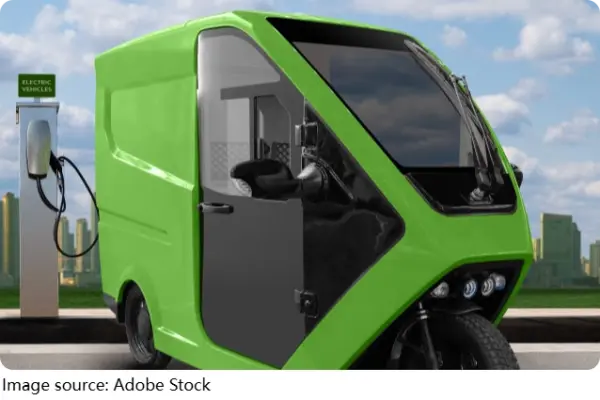
It's 7 a.m. on a damp Tuesday, and the narrow streets of a bustling neighborhood are just waking up. A man in a raincoat pulls up to a corner store, not on foot or by scooter, but on a three-wheeled electric bike with a boxy trailer. He unloads crates of tomatoes, onions, and leafy greens—enough for the day's sales.
No engine roar, no fumes, just the soft click of a latch and a quick handshake. Five minutes later, he's gone, gliding silently to the next stop.
This quiet exchange happens hundreds of times a day in cities where bike lanes are expanding and car traffic is being reined in. And behind it is a growing trend: small vendors and independent suppliers turning to low-cost electric tricycles to keep their businesses moving—without the high costs or pollution of gas-powered transport.
The New Workhorse of the Last Mile
As more cities restrict large delivery vehicles in dense urban zones, small-scale vendors need efficient and affordable ways to transport goods. Electric cargo tricycles are emerging as a viable solution. While some entry-level models are advertised in the US$1,500–3,000 range, more typical commercial-grade trikes cost more. Depending on model, these vehicles can use rechargeable batteries, carry substantial loads, and travel tens of kilometers on a charge.
Unlike vans or motorbikes, cargo trikes can navigate narrow alleys, use bike lanes, and park close to delivery points. For vendors, this can dramatically cut logistical costs and increase flexibility — even if the low-cost “game-changer” pricing is not universal.
Green, Yes—But Also Practical
The environmental benefits are clear: zero tailpipe emissions, low noise, and minimal energy use. But for the people using them, the real appeal is practicality.
Take Rosa, a 52-year-old produce distributor in a mid-sized city. For years, she relied on a secondhand motor rickshaw that guzzled fuel and broke down every few weeks. "I'd lose half a day waiting for repairs," she says. Two years ago, she joined a city-backed pilot program that provided a subsidized e-trike. Now, she charges it overnight using her home outlet, maintains it with basic tools, and delivers to 12 shops daily—two more than before.
She's not alone. A 2023 study by an urban mobility nonprofit found that vendors using electric tricycles reported a 30% increase in daily deliveries and a 40% drop in transport costs. Many also noted less physical strain—no more back pain from carrying heavy loads.
Design That Serves the Street
These aren't high-tech prototypes. They're rugged, modular, and built for real work. Most models include:
1. Detachable cargo boxes—lockable, weather-resistant, and easy to customize for produce, baked goods, or dry goods
2. Low center of gravity—so they stay stable even when fully loaded
3. Pedal-assist motors—so riders can climb gentle hills without overexertion
4. Simple maintenance—fewer moving parts than combustion engines, with brake and tire replacements available at local bike shops
Some vendors add canopies for rain, LED signs with their business name, or insulated compartments for temperature-sensitive items. The tricycle becomes not just a vehicle, but a mobile storefront.
In neighborhoods where trust and familiarity drive sales, that visibility matters. Customers start recognizing the same trike every morning. They know when to expect their bread, their vegetables, their coffee beans. The rhythm of delivery becomes part of the neighborhood's daily life.
Powering a Micro-Logistics Revolution
This shift is quietly reshaping urban logistics. Instead of relying on large trucks for infrequent bulk deliveries, many cities are now seeing a rise in hyper‑local, frequent, small‑batch distribution using electric cargo bikes — a model often called “micro‑freight.” Planners are responding: for example, New York City has authorized commercial e‑cargo bikes (including wider, four‑wheeled models) and created dedicated loading zones for them. Portland has piloted a Zero‑Emission Delivery Zone to prioritize access for zero‑emission delivery vehicles such as e-cargo trikes.
Incentive programs are also emerging: organizations in some U.S. cities can receive subsidies to purchase e-cargo bikes and use micro‑hub models, where larger vehicles transfer goods to smaller electric bikes.
While some anecdotal reports suggest significant benefits for vendors and urban cooperatives, widespread data on cost reductions (e.g., 60%) or shared ownership models are still limited in publicly documented research — signaling a need for more robust, real-world evaluations.

The Quiet Engine of Change
The electric tricycle may look modest, but it's part of a larger transformation—one where sustainability and survival go hand in hand. It's not about replacing trucks entirely, but about creating smarter, fairer ways to move what people need, right where they need it.
For the vendors using them, these trikes aren't just tools. They're independence. They're dignity. They're a way to keep working, keep earning, and keep contributing—without harming the air or the streets.
Next time you see a three-wheeled bike loaded with groceries or supplies, don't just see a vehicle. See a decision: to move quietly, to move affordably, to move forward. And remember—sometimes, the most powerful engines are the ones you barely hear.