Desert to Drive

Luca
| 18-12-2025
 · Automobile team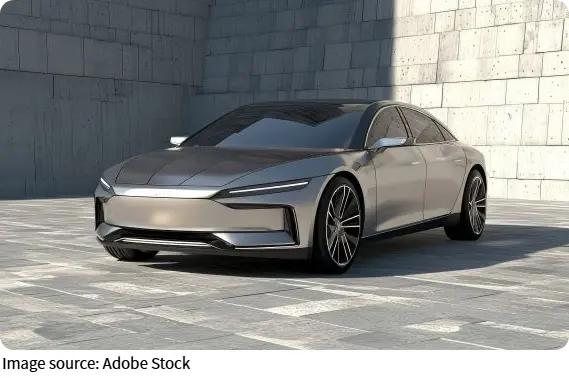
You're standing at a crosswalk in central Dubai when a low-slung, matte-finish machine glides past—no engine roar, no exhaust note, just a whisper and a ripple in the hot air. It's not a Tesla. Not a Porsche.
The shape is too sharp, the presence too deliberate.
A few seconds later, another one follows, this time in deep sapphire blue, its lights pulsing like a heartbeat. You realize: you've just seen two models from two different brands, neither from Germany or Italy, both built for speed, silence, and sand.
Across the United Arab Emirates, a quiet revolution is underway. Beneath the skyline of glass and steel, a new generation of electric performance vehicles is emerging—not imported, but engineered locally with Gulf ambition, global talent, and a clear vision: to prove that the future of high-end motoring isn't just European or American. It's also desert-born.
Lucid: The Flagship with a Gulf Pulse
Lucid Motors may have launched in California, but its transformation into a true luxury competitor was made possible by strategic investment from the UAE. With deep backing from sovereign funds, Lucid expanded its R&D footprint into Dubai, focusing on battery efficiency and thermal management—critical in a region where summer heat can cripple even the most advanced EVs.
The Lucid Air Sapphire isn't just fast (0–100 km/h in under 2 seconds); it's smart. Its adaptive suspension reads the road 500 times per second. Its cabin uses plant-based leather and recycled aluminum. And its range—over 700 kilometers in real-world Gulf conditions—is unmatched in its class. Unlike many European EVs that overheat during sustained driving, the Air's cooling system was stress-tested on desert highways, making it one of the few electric super sedans built for the region, not despite it.
But Lucid is just one player in a growing field.
Arrinera Hussarya: From Concept to Desert-Ready
Originally a Polish project, the Arrinera Hussarya found new life when a UAE-based tech consortium acquired the rights and moved development to Abu Dhabi. The goal? To build a fully electric supercar that could handle 48°C heat, dusty winds, and high-speed stability—all without sacrificing luxury.
The result is a 1,000-horsepower coupe with a carbon-fiber monocoque, active aerodynamics, and a battery system cooled by a dual-phase liquid loop. Engineers reworked the entire thermal architecture to prevent degradation in extreme climates. Now, the Hussarya isn't just surviving the desert—it's using it as a proving ground.
Limited to 99 units, it's not mass-market. But it's turning heads: one recently completed a high-speed lap at the Yas Marina Circuit with no power rollback, a feat that surprised even seasoned European performance teams.
W Motors Lykan HyperSport (Electric Evolution)
Best known for the original Lykan HyperSport—famously featured in Furious 7—W Motors, headquartered in Dubai, is now shifting gears. While the original was a gas-powered showpiece with diamond-encrusted headlights, the company is developing an all-electric successor set for 2026.
Early specs suggest a quad-motor setup with torque vectoring on every wheel, a range of 600 kilometers, and a body made from lightweight, heat-reflective composites. More importantly, the new model will be designed for usability, not just spectacle—something collectors have asked for after years of owning "garage art" that rarely hits the road.
W Motors isn't chasing Tesla. It's building a niche: ultra-luxury EVs for owners who want exclusivity and innovation.
The Gulf Advantage: More Than Just Money
It's easy to assume these brands exist because of deep pockets. But funding is only part of the story. What the UAE offers is something harder to replicate: freedom to experiment.
Without the regulatory inertia or union constraints of traditional auto hubs, these teams can move fast. Engineers from Germany, Canada, and Japan collaborate in Dubai's free zones, where intellectual property rules are flexible, and prototyping is fast-tracked. Test tracks stretch across the desert, allowing for extreme-condition validation that's hard to simulate elsewhere.
And there's a cultural shift: younger Gulf investors aren't just buying Western brands. They're commissioning their own. A growing number of private buyers are co-developing features—custom interiors, AI-driven driving modes, even biometric access systems—turning ownership into co-creation.
A New Kind of Status
For decades, luxury meant a badge from Maranello or Stuttgart. Today, among a new wave of tech-savvy, climate-conscious millionaires, status is shifting. Owning a car that's rare, sustainable, and purpose-built for extreme environments sends a different message—one of foresight, not just wealth.
These vehicles aren't replacing Ferraris. But they're offering an alternative: performance with purpose, luxury with responsibility. And as charging networks expand and battery tech improves, they're becoming more than symbols—they're usable, daily drivers for a new elite.
The Future on Four Wheels
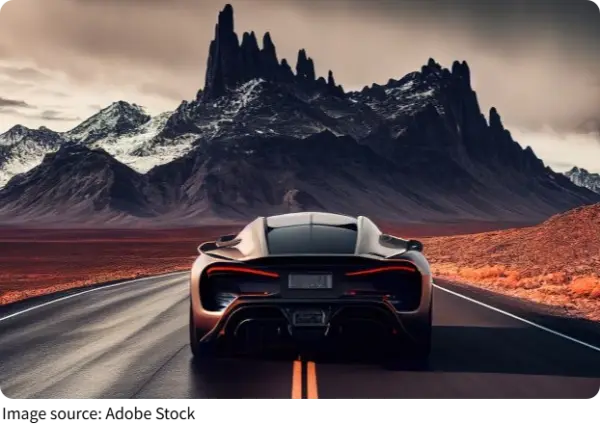
The desert has always been a place of reinvention. Now, it's becoming a cradle for high-performance electric mobility. From Lucid's efficiency to Arrinera's resilience to W Motors' evolving vision, the UAE is proving that innovation doesn't need to come from the same old factories.
Next time you see a silent, sculpted car slip through the city at dawn, ask yourself: who made it, and why? The answer might not be in a history book. It might be in a lab, right now, being rewritten.